
When the Monks Pass By
Every morning, before the streets grow busy, a line of monks walks past waiting doors — and in Myanmar, one of the oldest forms of generosity is still measured in spoonfuls of rice.
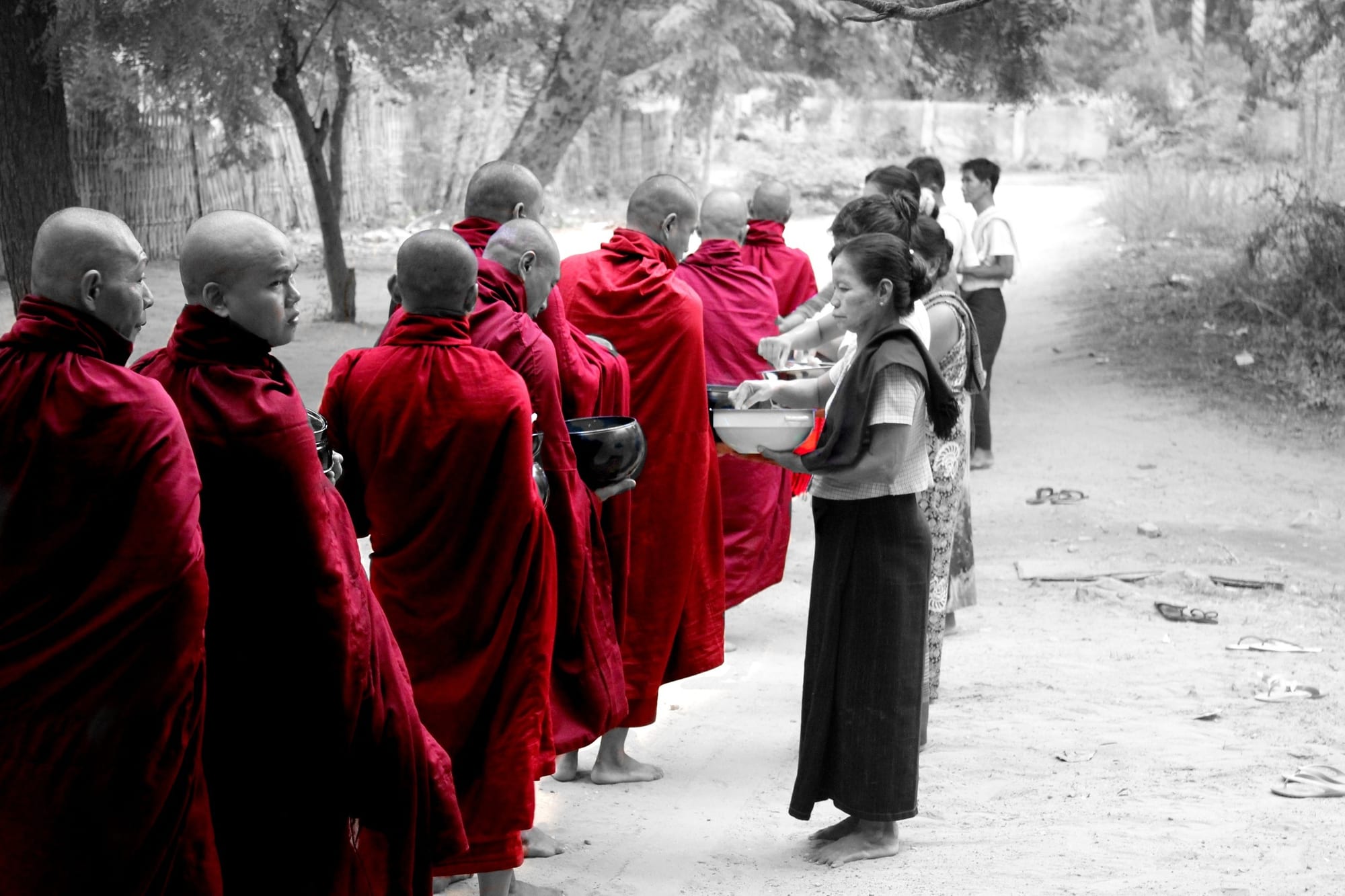
Early in the morning, before the streets become busy and the day’s work begins, a familiar sight can still be seen in many parts of Myanmar: a line of Buddhist monks walking quietly through the neighbourhood, each carrying an alms bowl.
There is no announcement and no invitation. Yet as the monks approach, doors open. People come out carrying whatever they have prepared — a scoop of freshly cooked rice, curry, fruit, or another dish they would like to offer. It happens in villages and towns, along quiet country roads and in busy urban neighbourhoods. Some families have plenty. Others have very little. Still, they give.
A morning act of generosity
For many Buddhist families in Myanmar, offering food to monks is known as soon laung (ဆွမ်းလောင်း), a practice of giving that forms part of everyday religious life.
The tradition has its roots in the ancient Buddhist custom of alms gathering. During the Buddha’s time, monks travelled on foot and depended on lay communities for food. In return, the relationship gave laypeople an opportunity to practise generosity and make merit — a relationship between the monastery and the community that continues in Myanmar today.
The monks do not come only to wealthy households, nor is an offering expected from everyone. Along the same street, one person may offer a generous meal, another a small portion of rice, while someone with nothing to give may simply stand respectfully as the monks pass. The value is not measured by how much is placed in the bowl. It is the act of giving that matters.
Through changing times
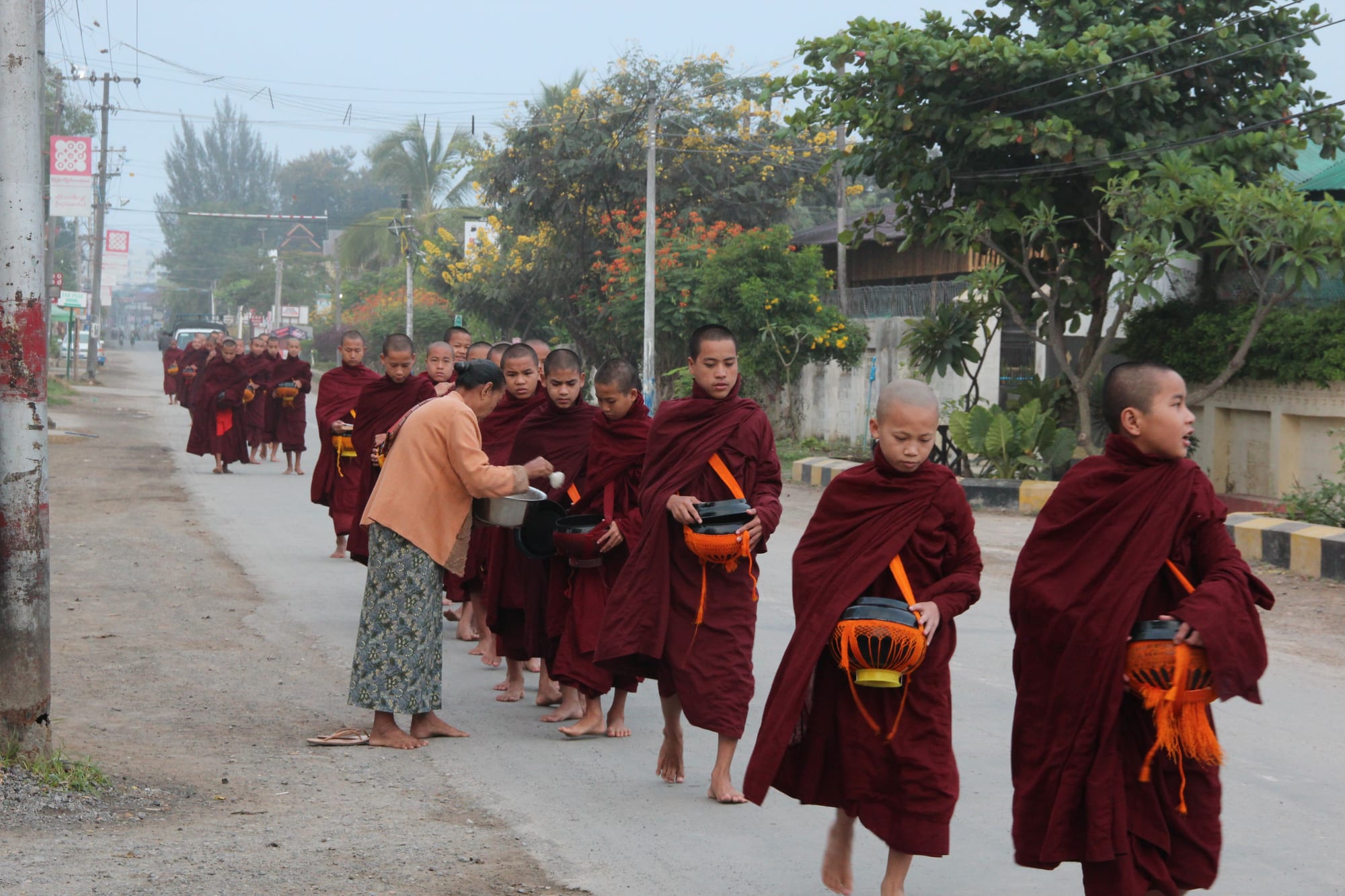
Myanmar has changed enormously across generations. Cities have grown, ways of working have changed, families have moved, and the country has passed through prosperity and hardship, peace and uncertainty. Yet on many mornings, this simple scene remains.
Barefoot monks continue along the road with their bowls. People still step outside their homes. Rice is carefully spooned out. Hands come together in respect. For a few moments, the morning becomes very quiet and very simple: one person giving, another receiving, each taking part in a tradition much older than either of them.
Perhaps this is one reason generosity remains so visible in Myanmar life. Giving does not always wait until a person has more than enough — sometimes it comes from what is already on the table.
And tomorrow morning, somewhere in Myanmar, another line of monks will walk down another street. Someone will see them coming. And another door will open.