
Shwedagon Pagoda: A Golden Landmark, a Living Faith
As evening settles over Yangon, Shwedagon catches the last light. Its golden surface warms against the changing sky, while the surrounding shrines begin to glow beneath their lamps.
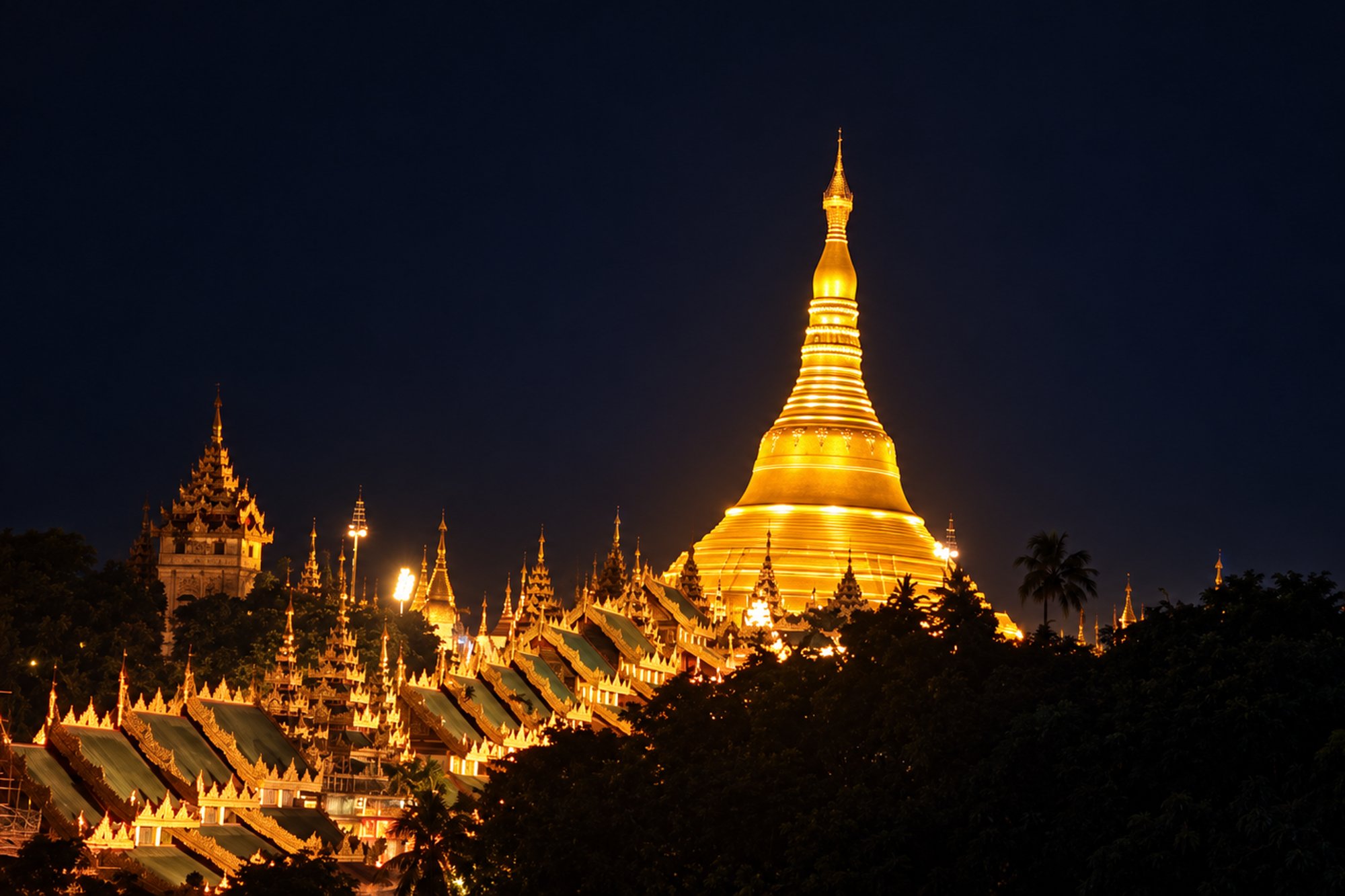
As evening settles over Yangon, Shwedagon catches the last light. Its golden surface warms against the changing sky, while the surrounding shrines begin to glow beneath their lamps. Across the platform, people walk, kneel in prayer or sit quietly with their families.
Standing on Singuttara Hill, the pagoda rises approximately 99 metres above its platform. Its scale is impressive, yet some of its most memorable details are small: flowers placed before a Buddha image, the sound of a bell, or water poured carefully at a shrine.
A beginning preserved in belief
According to Buddhist tradition, Shwedagon’s story began more than 2,500 years ago. Two merchant brothers, Tapussa and Bhallika, offered food to the Buddha after his enlightenment and received eight strands of his hair. They brought these relics home, where King Okkalapa helped enshrine them on Singuttara Hill, together with relics associated with three earlier Buddhas.
This is the pagoda’s sacred founding account, passed down through religious tradition. It explains the deep reverence surrounding Shwedagon, though it should be distinguished from a construction date established through historical evidence.
Built and cared for across generations
The historical record becomes clearer in the fourteenth and fifteenth centuries. Royal chronicles mention work by King Binnya U in 1362–63, while inscriptions from King Dhammazedi’s reign record earlier repairs. Successive rulers enlarged and maintained the monument, shaping the pagoda seen today.
One of its most significant patrons was Queen Shin Sawbu, the fifteenth-century Mon ruler. She improved the platform and supported the pagoda’s upkeep. Historical accounts also describe her donating her own weight in gold to gild the stupa. It is a striking image: a queen’s personal offering becoming part of a landmark treasured by generations.
Earthquakes and repairs have also shaped Shwedagon. After serious damage in 1768, restoration under King Hsinbyushin gave it much of its present form. Its survival reflects centuries of rebuilding and care.
Beauty that rewards a closer look
From a distance, the main stupa appears as a single golden form. Closer examination reveals a carefully arranged sequence of terraces, a bell-shaped body, lotus forms and a slender upper spire. Above them sits the hti, the ceremonial umbrella crown, with a jewel-adorned vane and diamond bud higher still.
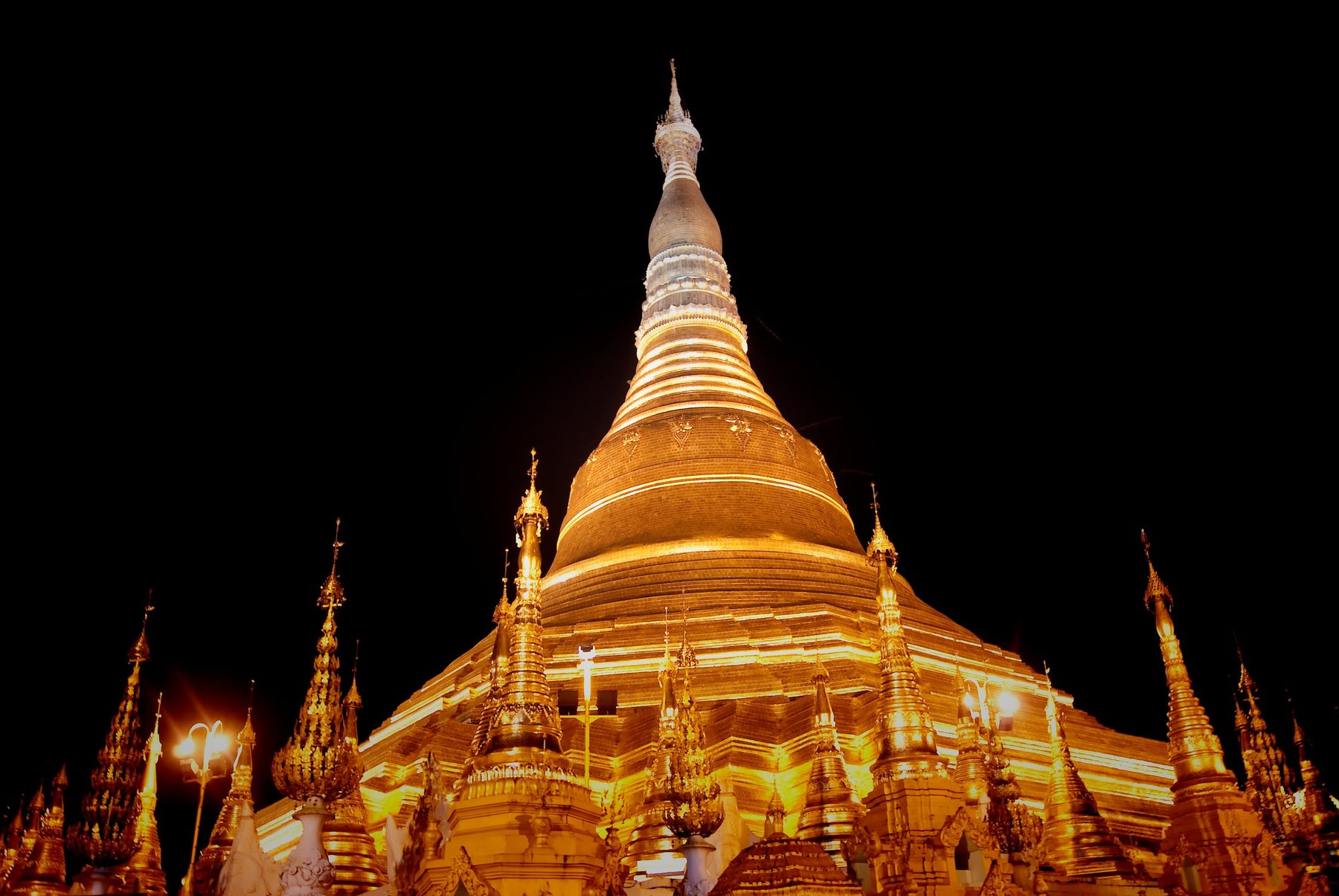
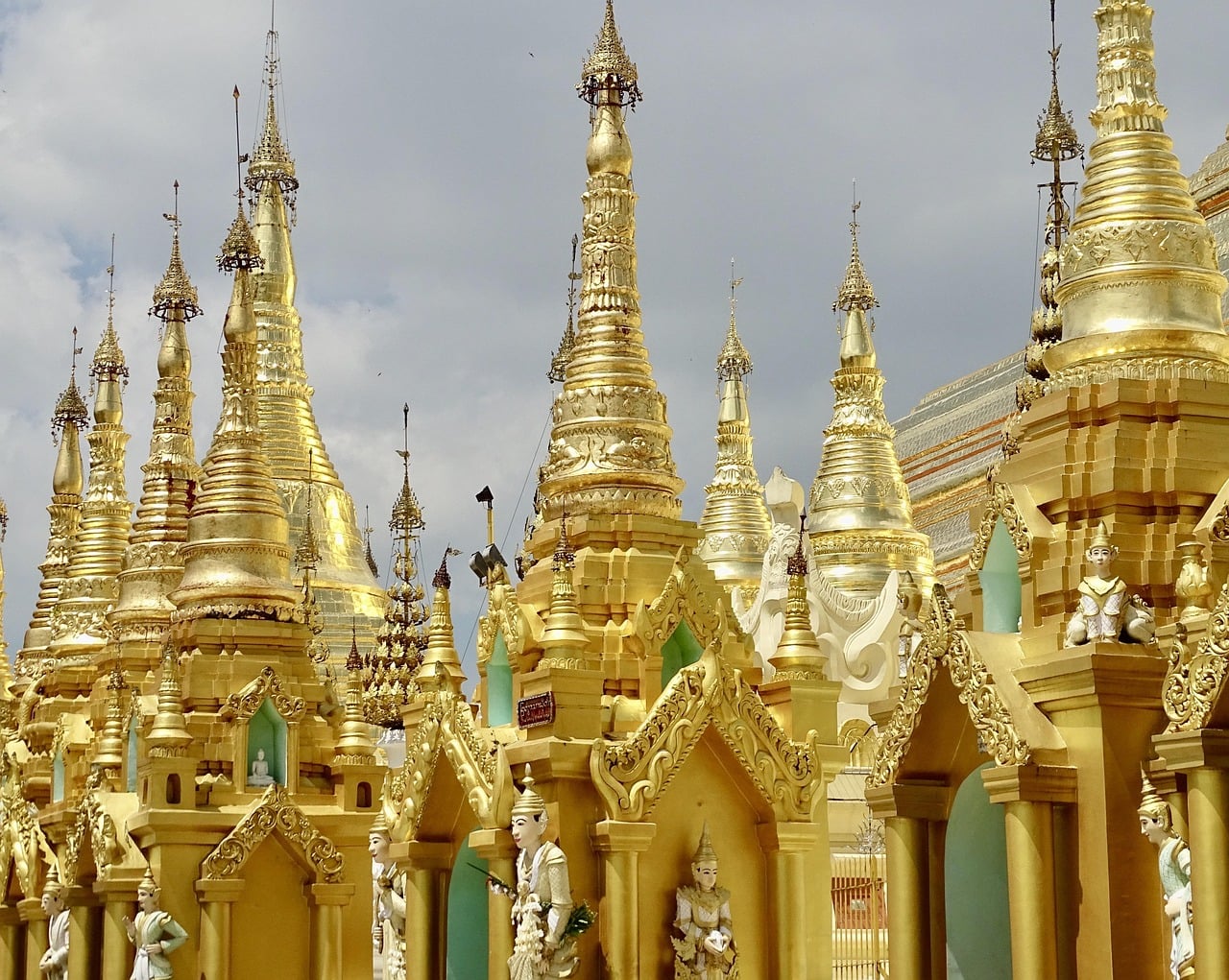
The surrounding pavilions and shrines deserve attention too. The pagoda’s own records describe generations of rulers commissioning work in Myanmar’s traditional arts. Together, these structures preserve the skill of makers whose work supports both worship and beauty.
The customs of a personal visit
One distinctive custom centres on the eight planetary posts, associated with the days of the week. There are eight because Wednesday is divided into two. Devotees often visit the post corresponding to their birth day, offer flowers and pour water over its Buddha image while praying.
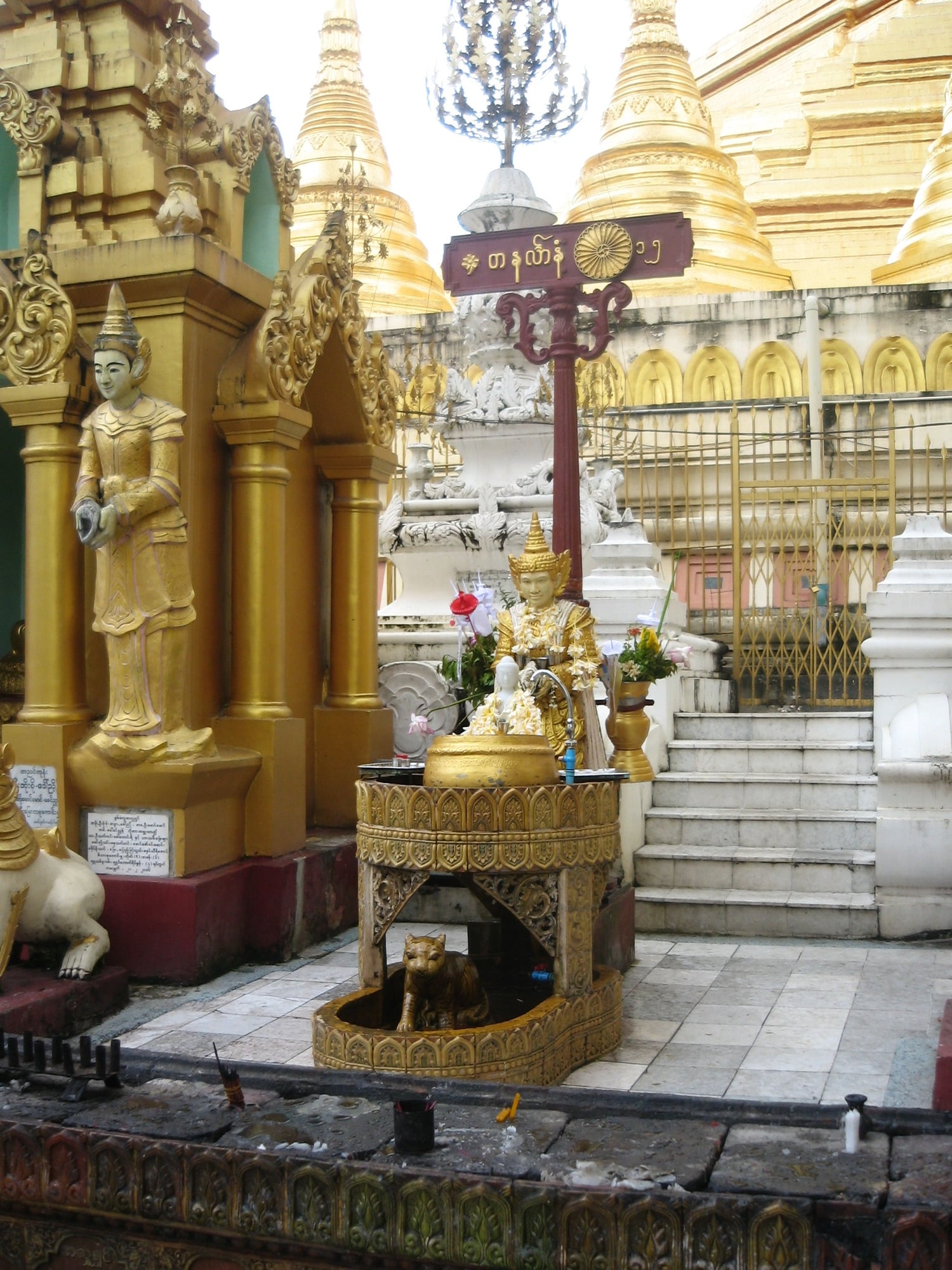
Walking clockwise around the stupa is another familiar practice. These repeated gestures give a visit its own gentle rhythm.
Visitors remove their shoes and socks and dress respectfully, covering shoulders and knees. On the platform, space is shared with people praying, meditating and spending time with family. A little patience allows those quieter moments to remain undisturbed.
The religious calendar brings larger gatherings. Tabaung, usually falling in February or March, is an important festival period. Tazaungdaing includes the tradition of weaving robes for offering to the Buddha, linking devotion with collective effort and craftsmanship.
Shwedagon today
Shwedagon remains an active place of worship. Its religious calendar continues to bring devotees together throughout the year, from full-moon ceremonies to smaller daily observances — a steady rhythm that has continued for generations.
Preserving the complex also involves everyday work. A dedicated administration oversees the building’s upkeep, from caring for its gold and jewellery to the practical work of maintaining the grounds. Behind the golden skyline is a continuing effort to look after a place used and cherished by many people.
Shwedagon’s place in Myanmar’s heritage rests in both its craftsmanship and these continuing acts of care. The gold draws the eye upwards. Below it, a person placing flowers or pausing in prayer gives the monument its human scale.