
The Stories Held in Teak
A look at Myanmar's wooden monasteries, and the faith, learning and craftsmanship behind them.
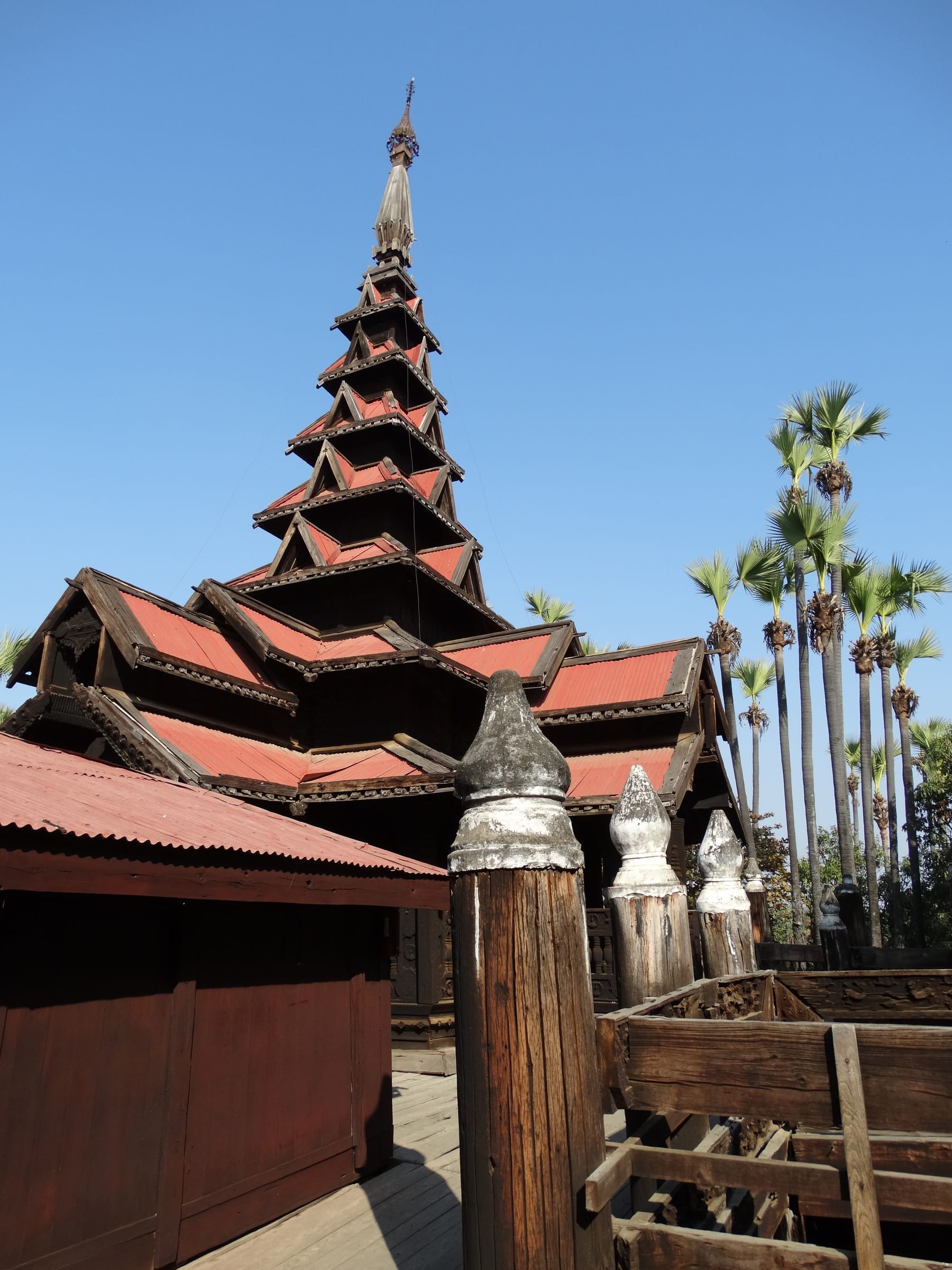
An old wooden monastery holds many stories. There is the work of the carpenters who shaped its beams, the generosity of the people who supported it, and the everyday lives that gathered beneath its roof.
In Myanmar, monasteries have long been closely connected to their communities. Known as kyaung, they served as places where monks lived, children learned and families came together for religious occasions. People donated land, money and food, making the monastery part of village life.
A place to learn
Before modern schools became widespread, monastic education played an important role in Myanmar. Boys learned reading, writing, elementary arithmetic and Buddhist teachings. The connection remains in the language today: kyaung is also the Burmese word for school.
These buildings carried knowledge from one generation to the next. Their history belongs as much to the children who studied there and the families who supported them as to the monks who taught within their walls.
History shaped by hand
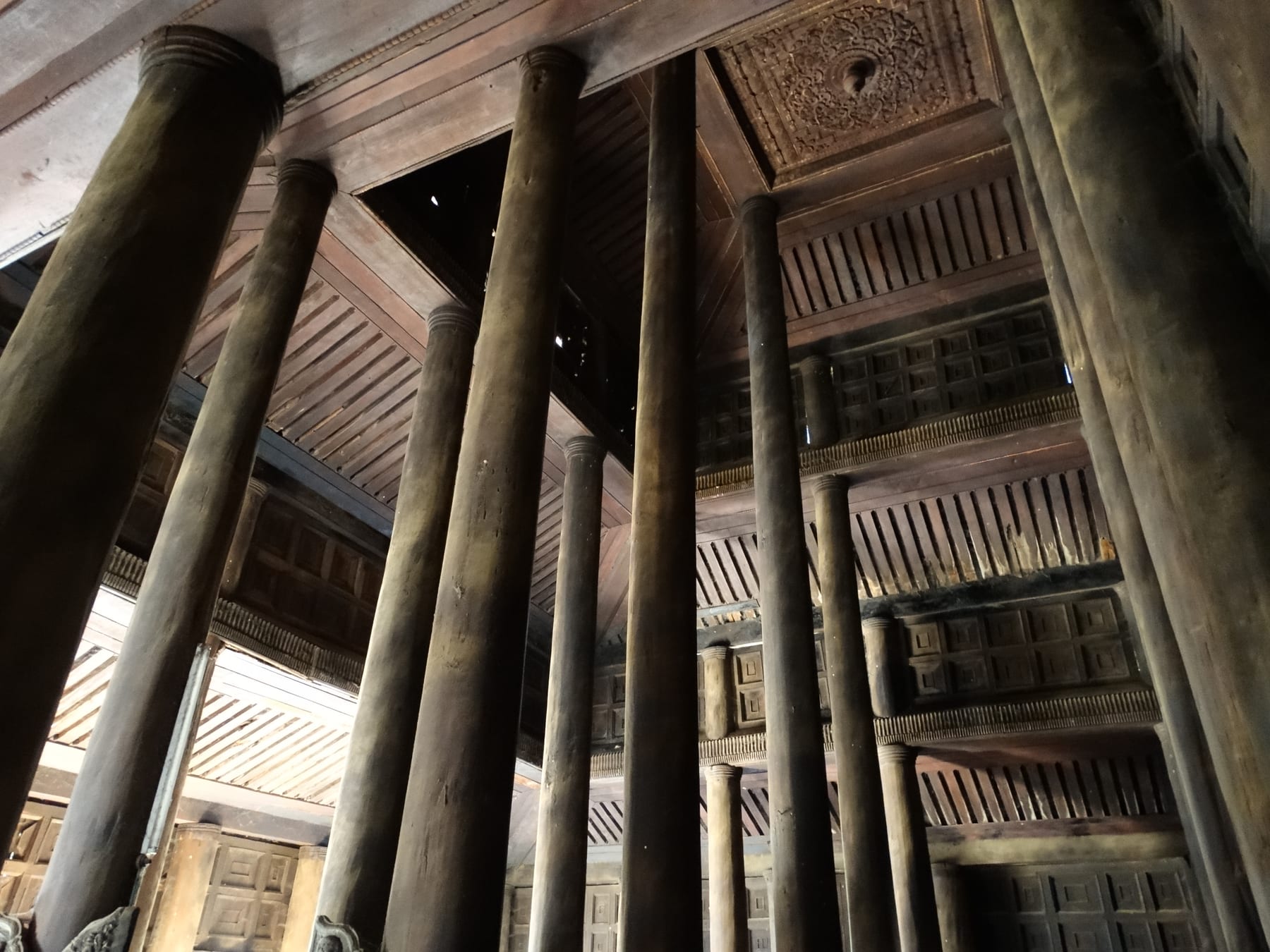
Bagaya Monastery at Inwa offers one documented example of this wooden heritage. Its teak structure is supported by 267 large posts, with carvings of birds, animals and floral patterns decorating the building. The details show how much care went into a place built for religious life and learning.
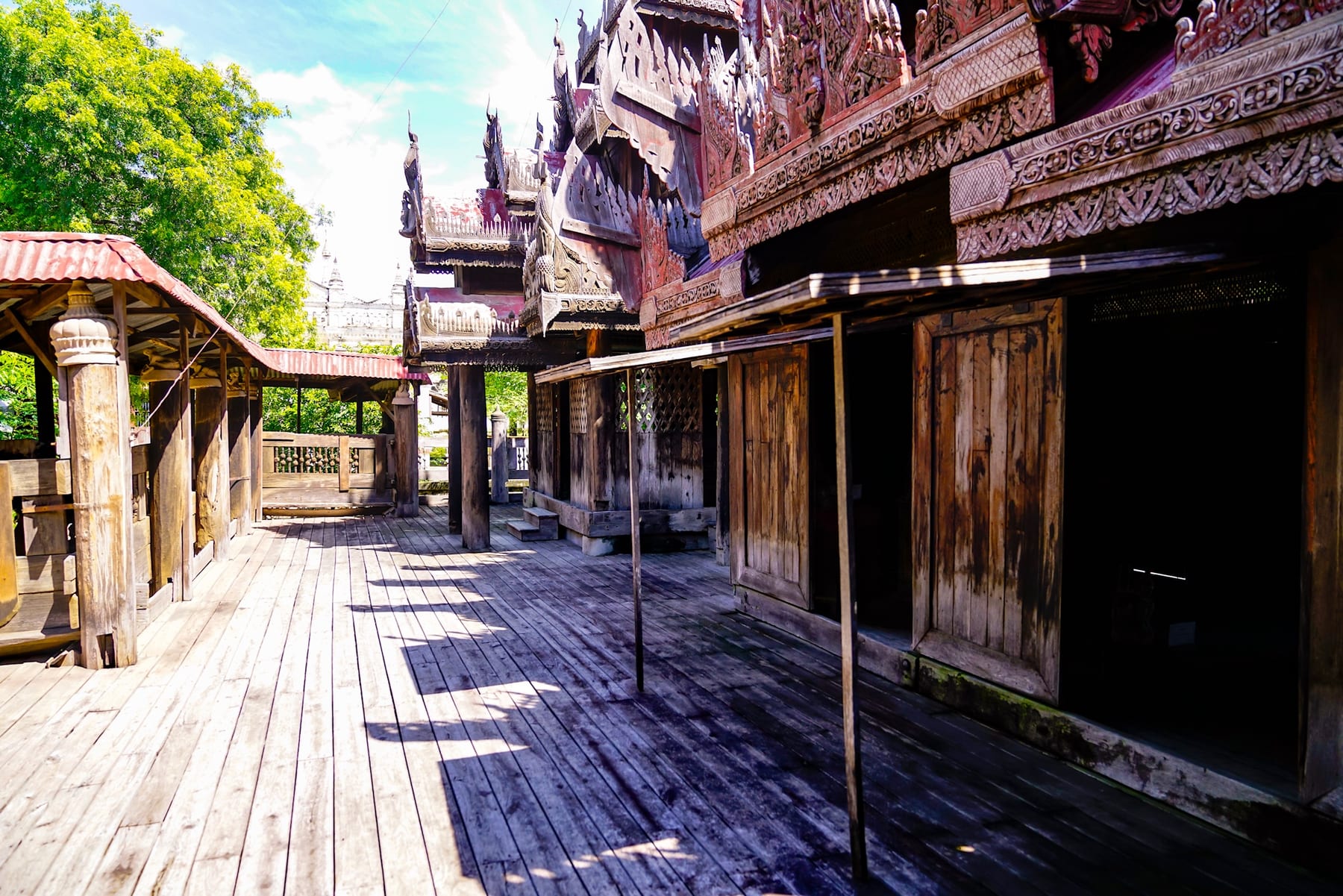
Another example is Yokesone Monastery in Salay, dating to 1882 during King Thibaw’s reign. Its woodcarvings depict scenes from the Jataka tales, stories of the Buddha’s previous lives. Converted into a museum in 1996, it preserves a different chapter of Myanmar’s monastic craftsmanship.
What these buildings carry
Looking at an old monastery, it is easy to notice the roof and carvings first. Yet its meaning also lies in the people behind it: those who gave what they could, those who worked the wood, and those who came to learn.
Preserving this heritage helps keep their part in Myanmar’s history visible. In the grain of the timber and the details carved by hand, there is still something of the lives that shaped it.