
When the Market Wakes: Morning Life in Myanmar
From misty wet markets before sunrise to five-day rotating markets in the Shan hills, the morning market remains one of the clearest windows into how Myanmar actually lives.
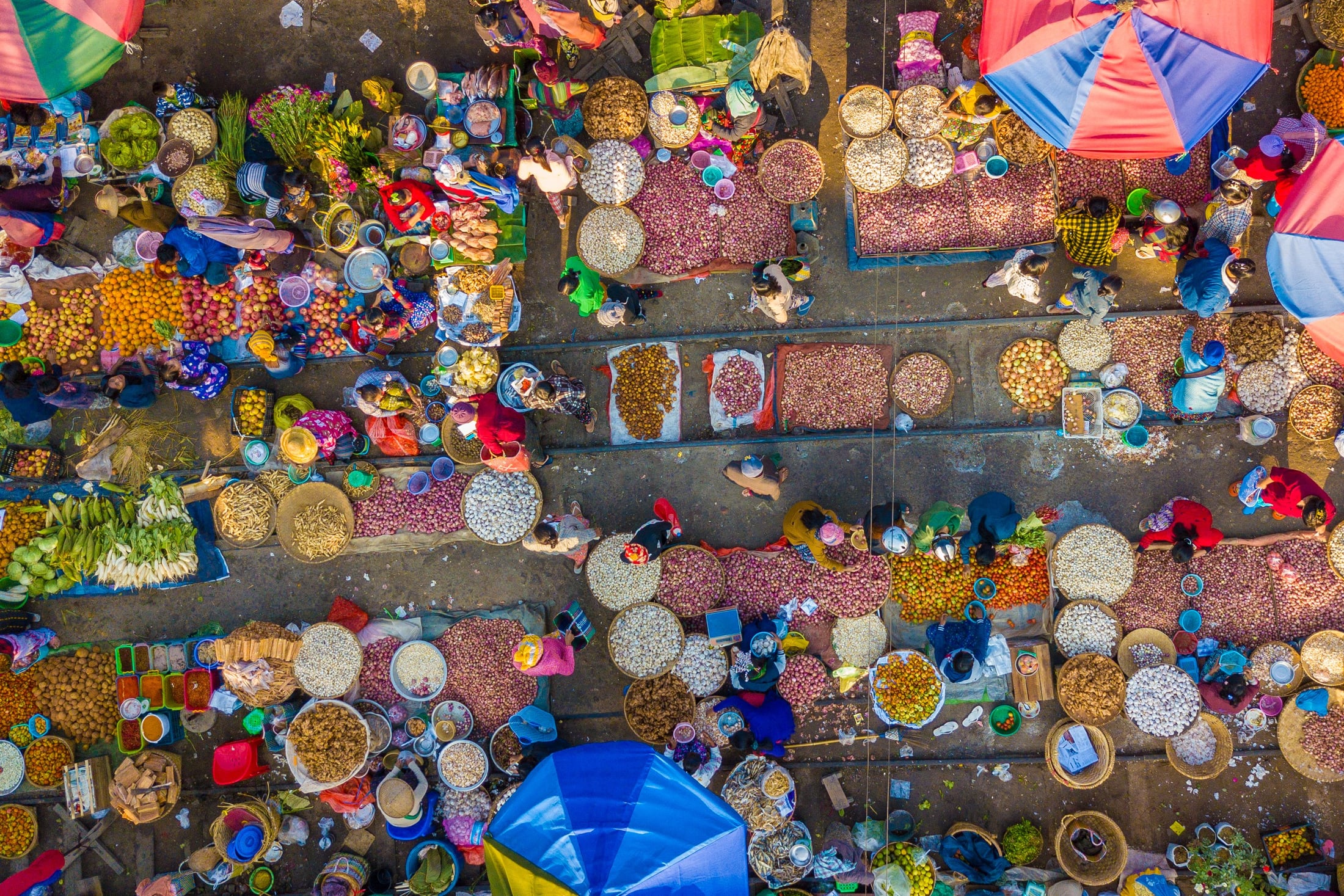
Before much of the day has begun, Myanmar’s markets are already awake.
Vendors arrange baskets of vegetables and herbs. Fish and meat are prepared for the morning’s customers. Piles of fruit add colour to crowded stalls, while pots and trays of cooked food wait for those looking for breakfast on the way to work. Customers move between them, inspecting what is fresh, asking prices and choosing ingredients for the day’s meals.
Whether in a busy city neighbourhood or a small rural community, the market is more than simply somewhere to buy food. For many people, it is part of the rhythm of everyday life.
Buying for today’s table
For generations, shopping for fresh ingredients has been closely connected with daily cooking in Myanmar.
Rather than filling a refrigerator with groceries for an entire week, many households traditionally buy what they need from a nearby market and prepare meals using ingredients bought that morning. A trip to the market might mean choosing fresh vegetables for a curry, fish for lunch, herbs for soup, or fruit to bring home. There are also ingredients that rarely receive much attention in a supermarket: bundles of local leaves and herbs, different varieties of beans, fermented products, dried fish, chilli pastes and seasonal produce that change throughout the year.
Modern habits are changing, particularly in larger cities. Supermarkets and convenience stores have become part of life, refrigerators and freezers make weekly shopping easier, and some families now prefer to stock up for several days at a time.
Yet the traditional wet market remains an important and lively part of many communities. Perhaps freshness is only one reason. There is also the pleasure of choosing.
Familiar faces across the stalls
Morning markets have their own relationships.
A regular customer may know which seller has the vegetables they prefer, who usually has good fish that morning, or which stall prepares a favourite snack. Sellers recognise familiar faces too.
A purchase can become a conversation. Prices are discussed, produce examined and recommendations exchanged. Someone may stop for breakfast before continuing the shopping. Another person may arrive carrying a basket, knowing almost exactly which stalls they will visit.
For a visitor, it can look chaotic. For those who come regularly, there is often a familiar order to it.
When market day comes
In parts of Shan State, including areas around Kalaw, the rhythm can be different again.
Some communities traditionally follow a five-day rotating market system. Instead of the same market operating in the same place every day, market activity rotates among different towns and villages. Market day becomes something to anticipate.
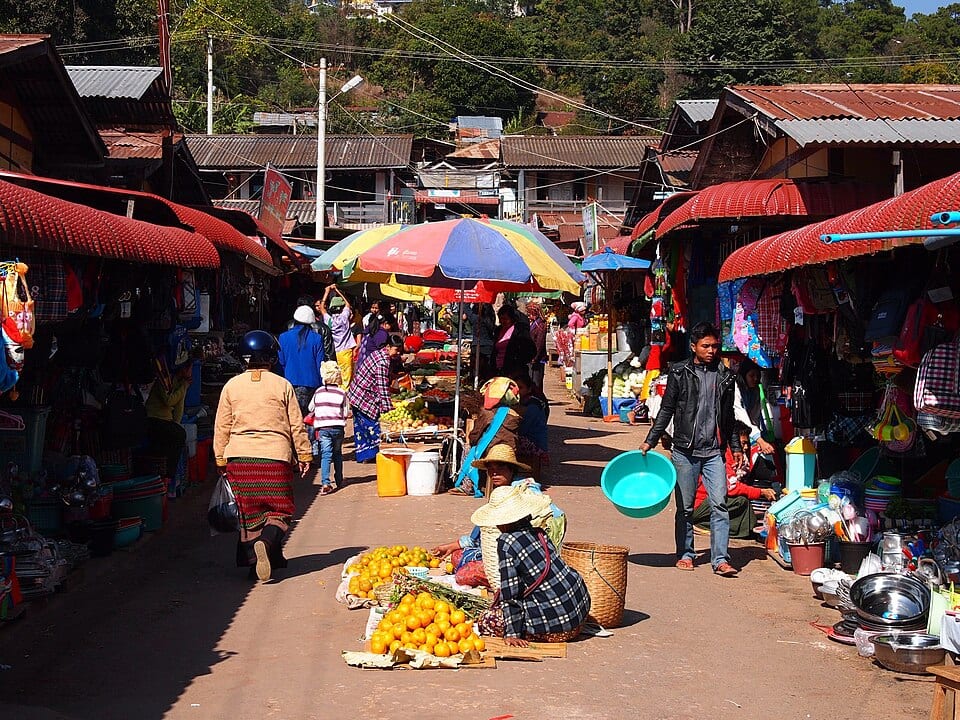
People may travel from surrounding villages carrying vegetables, fruit, tea, spices, handicrafts and other goods to sell. Others come to buy supplies that may not be readily available closer to home.
The market therefore serves another purpose. It brings people together. For communities separated by mountains and distance, a market day has traditionally offered a regular opportunity not only to trade, but also to meet people from neighbouring areas and exchange news.
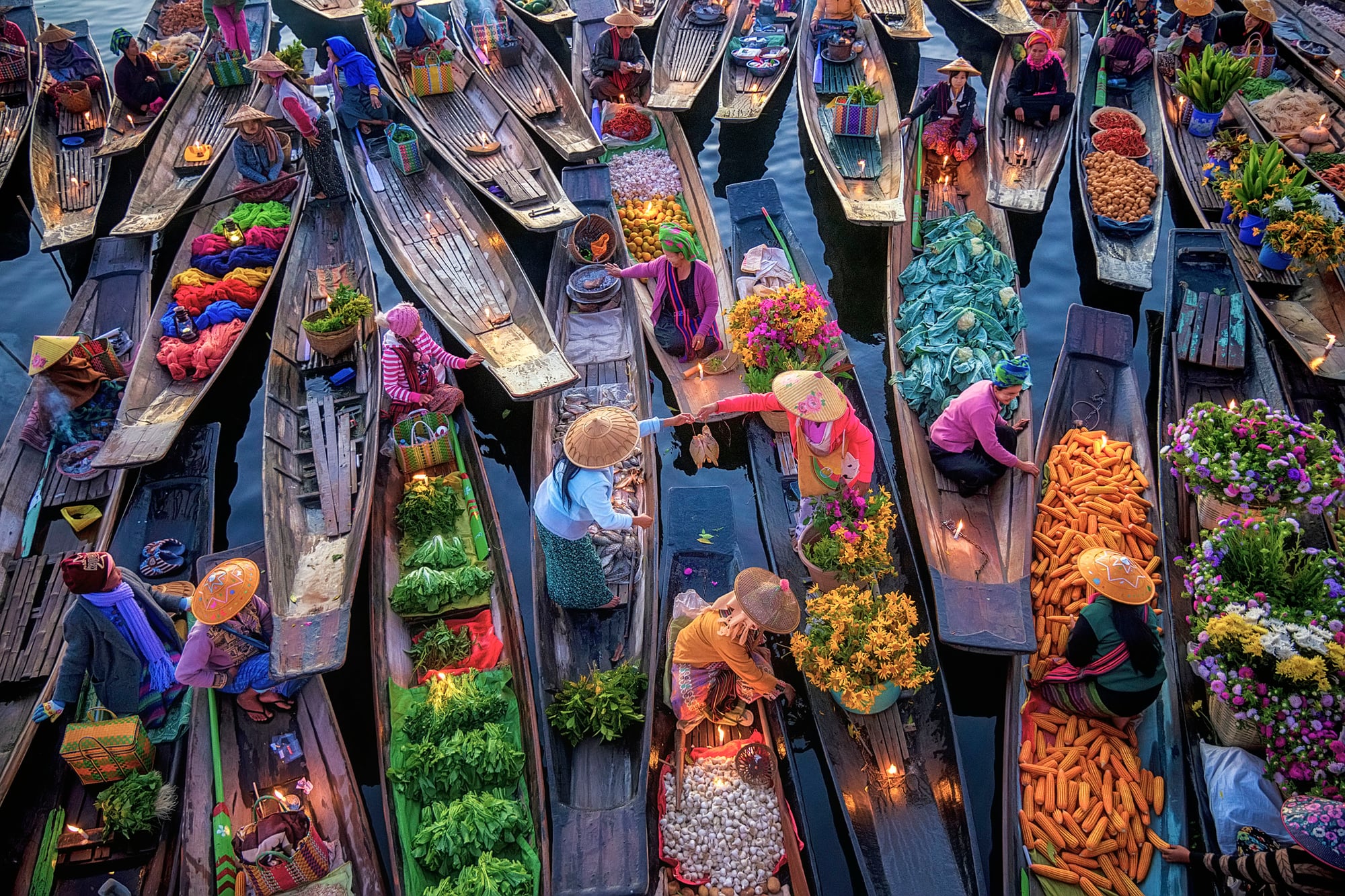
Not far away, on Inle Lake, the market takes to the water itself. Sellers pole narrow boats loaded with vegetables, flowers, fish and other goods, drawing up alongside one another so buyers can move from boat to boat instead of stall to stall. Candles and lanterns are often still lit from the early start, their light catching on baskets of corn, cabbage and chillies before the sun is fully up.
A morning in motion
The surroundings change from place to place.
A downtown market may be crowded with commuters and traffic. A neighbourhood wet market might occupy a few busy streets. Somewhere in the hills, sellers may arrive from surrounding villages for market day. Elsewhere, the morning itself becomes part of the scene, haze and woodsmoke settling low over the stalls as vendors carry their baskets through it.
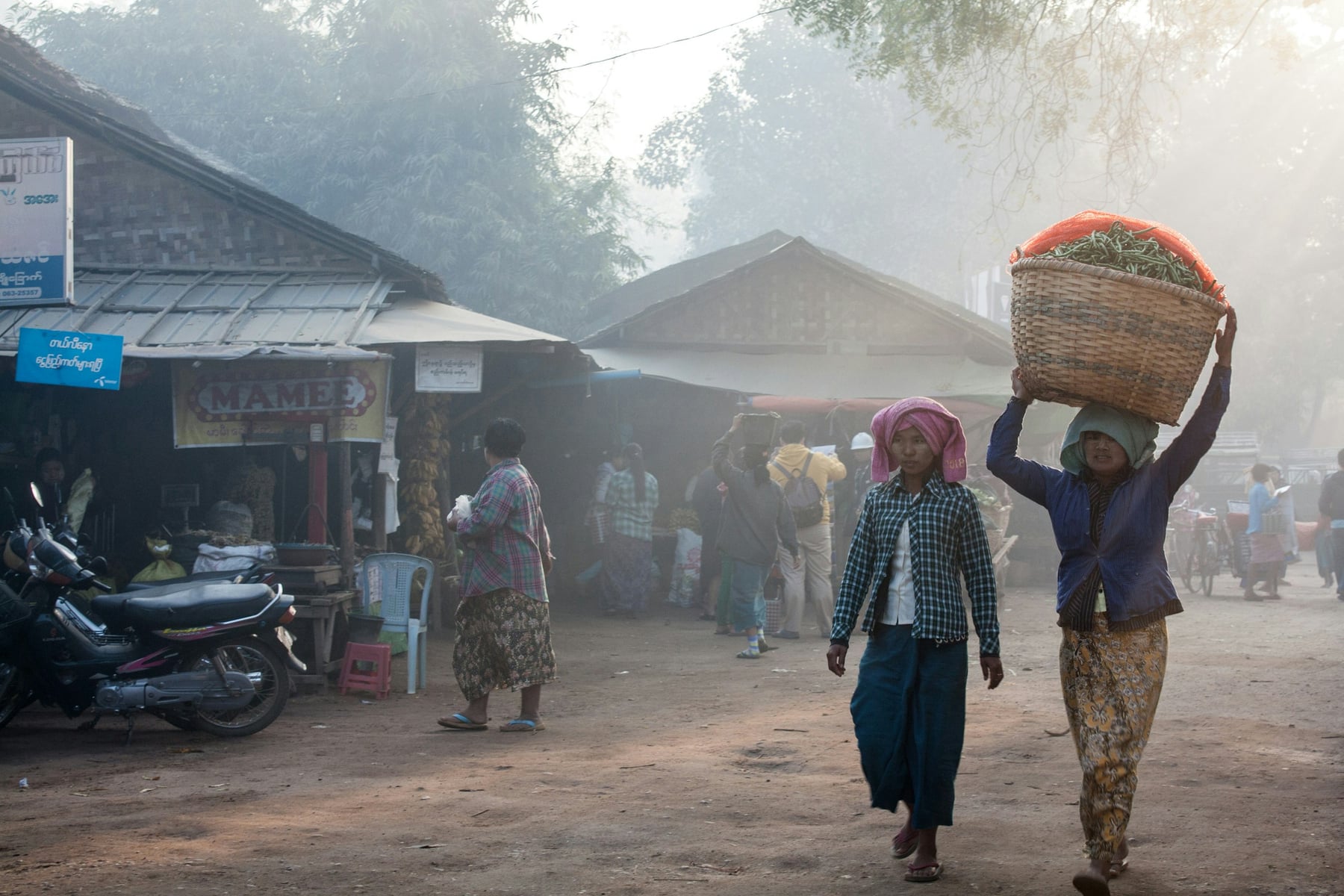
But there is something recognisable in all of them: the baskets being filled, the conversations between customers and sellers, the search for the freshest ingredients, the breakfast bought along the way, and eventually, the journey home with food that will become the day’s meal.
Markets reveal something that photographs of monuments and famous places cannot. They show a country in the middle of ordinary life. And sometimes, to understand how a place lives, the best time to arrive is early in the morning, just as the market begins to wake.