Traditional Jewellery: Gold, Craft and Celebration
A gold necklace resting against silk, a pair of earrings catching the light, a bracelet fastened before a celebration — in Myanmar, jewellery belongs to a wider story of craftsmanship, ceremonial dress and the occasions people choose to remember.
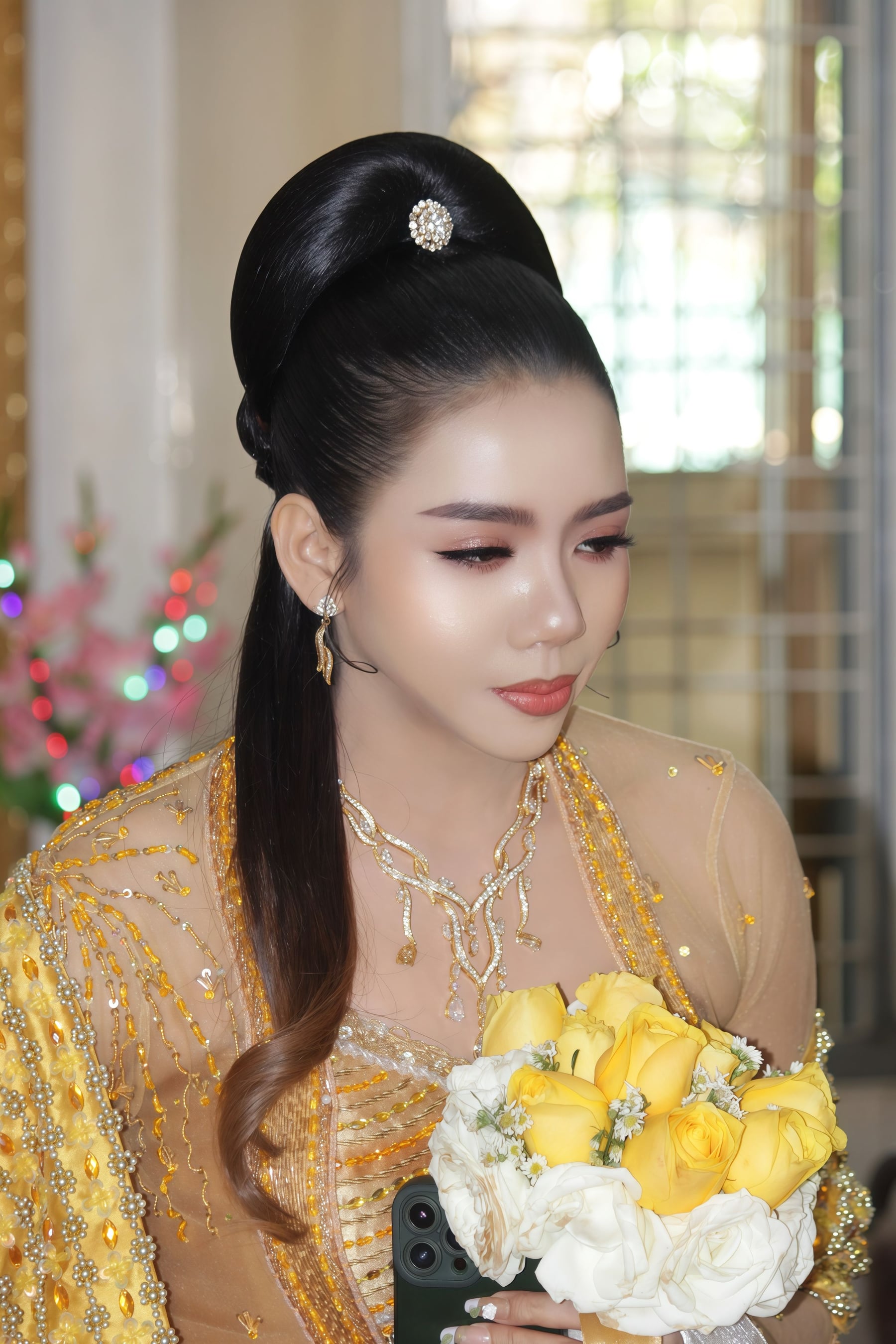
A gold necklace resting against silk, a pair of earrings catching the light, a bracelet carefully fastened before a celebration. Jewellery draws attention through small details. Look closely, and the beauty lies as much in the workmanship as in the precious material itself.
In Myanmar, these ornaments belong to a wider story of craftsmanship, ceremonial dress and the occasions people choose to remember.
A history worn close
Gold and silver jewellery have long accompanied Myanmar’s traditional clothing. Accounts from the Konbaung period describe necklaces, bracelets, anklets and rings set with precious stones. Dress and ornament also reflected social standing, with royal rules governing the use of certain jewels and materials.
These details offer a glimpse of jewellery’s place in earlier life. An ornament could express personal taste, but it could also tell others something about the person wearing it.
The care behind the gold
One surviving example of Myanmar’s historic goldwork is a nineteenth-century royal betel container now held by the Victoria and Albert Museum. Shaped as a mythical karaweik bird, it combines embossed gold, fine filigree, rubies and emeralds. Its stand carries floral decoration, while carefully worked feathers cover the bird’s body. Although it is a courtly object rather than something worn, it reveals the skill of the goldsmiths who served Myanmar’s royal world.
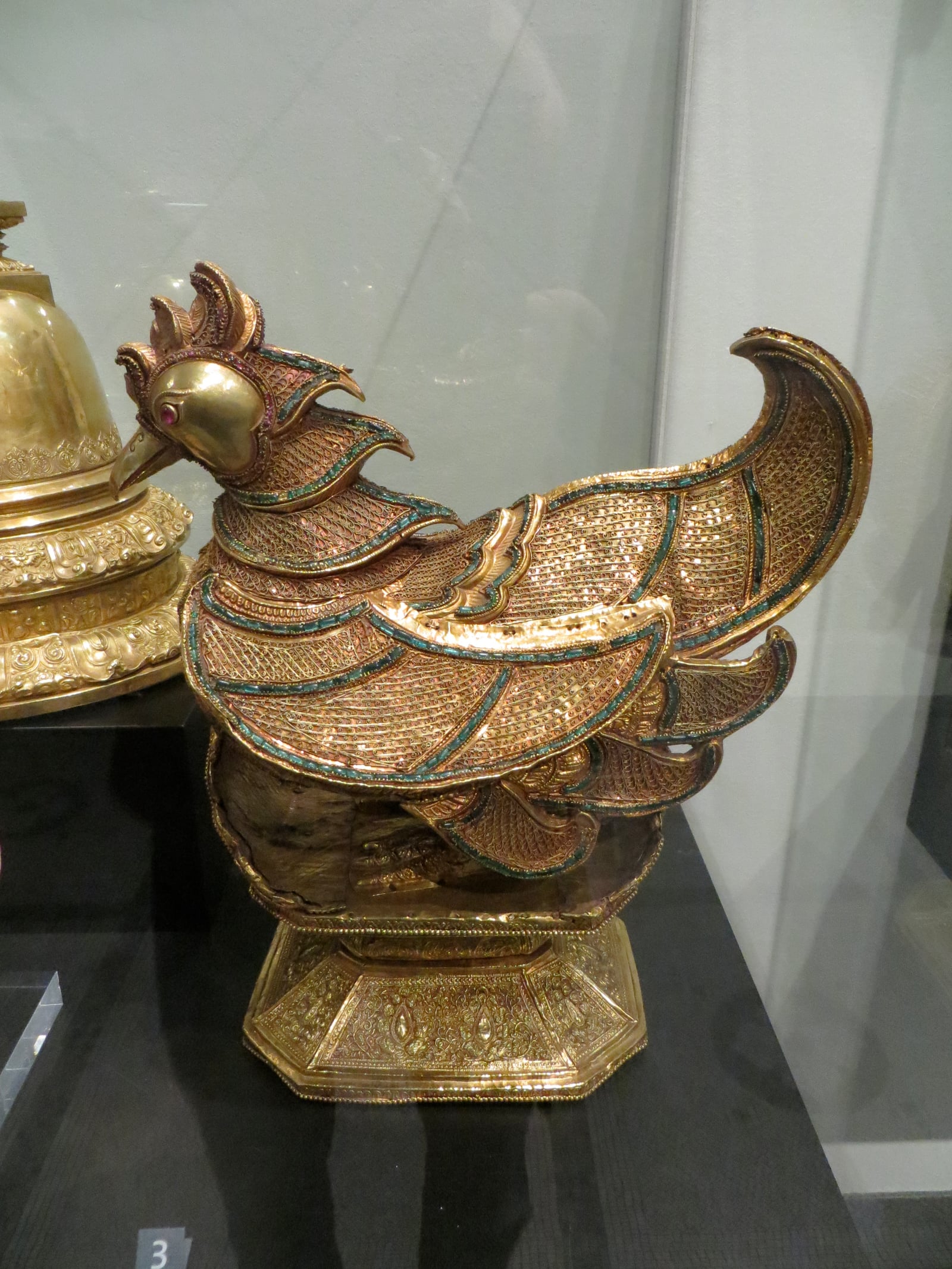
There is a particular pleasure in looking at such work slowly: following the curve of a leaf, noticing a tiny border, or seeing how a stone becomes part of the surrounding design. The gold catches the eye first. The maker’s care holds it.
Nine gems and a wish for good fortune
Among the jewellery traditions known in Myanmar is nawarat, the nine-gem arrangement shared with several South and Southeast Asian cultures. In the traditional design, a ruby occupies the centre, surrounded by eight other gems. The stones have astrological associations, and the arrangement has been worn with beliefs in protection and good fortune.
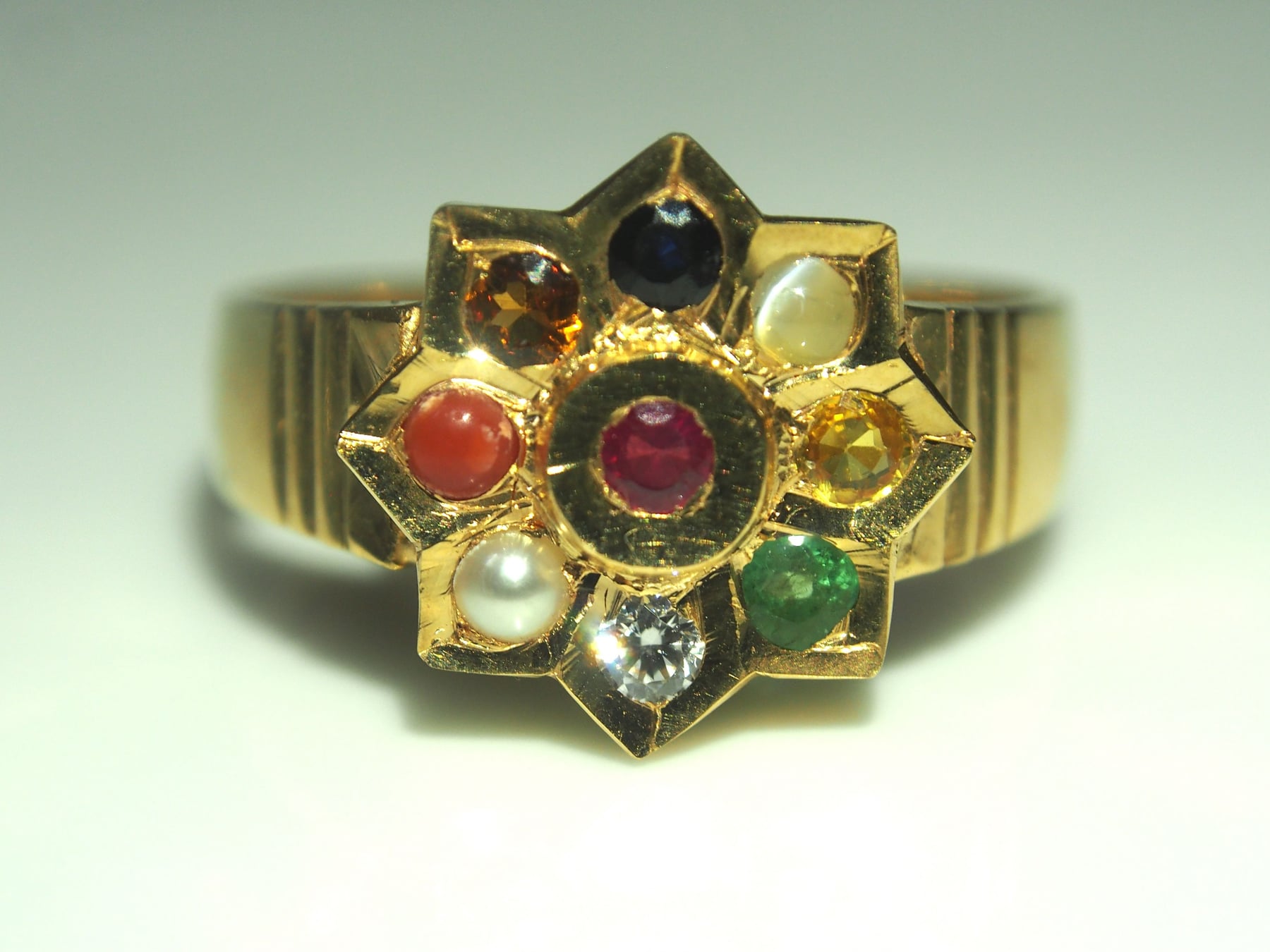
Here, colour carries another layer of meaning. A collection of contrasting stones becomes an expression of hope, bringing together the beauty of an ornament and the wishes of its wearer.
Jewellery for a special day
Myanmar’s communities have different wedding customs, so there is no single jewellery tradition that represents them all. Within Bamar wedding traditions, one recorded rite, dali phwe, involves placing a long gold or silver-alloy chain around the couple together, along with flower garlands. Jewellery becomes part of the ceremony itself, physically joining two people at the beginning of married life.
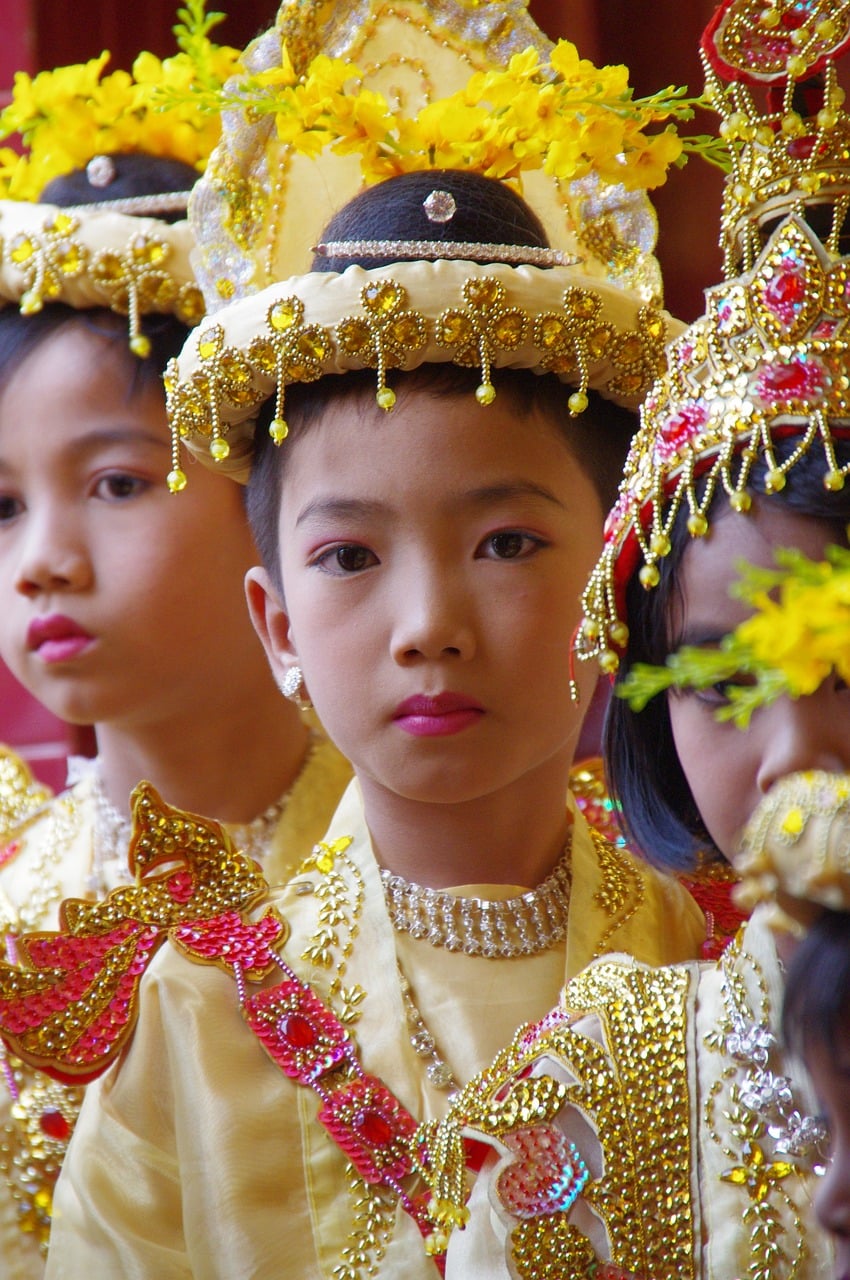
Adornment also accompanies childhood ceremonies. A girl’s traditional ear-piercing celebration, na htwin, may take place alongside a boy’s shinbyu, or Buddhist novitiation ceremony. She may dress as a princess for the occasion, echoing the royal appearance of the boy before he changes into monastic robes.
The meaning that stays
A finished piece of jewellery invites two kinds of attention: to the hands that shaped it, and to the life in which it is worn.
For Myanmar Canvas, that connection is part of the country’s craft heritage. A necklace can be admired for its gold and stones, yet remembered for a wedding day, a family gathering, or the person who helped fasten it.
The occasion passes. The small details stay.