
Myanmar Lacquerware: Beauty Made Slowly
A lacquerware bowl invites a closer look. Across its smooth surface, fine lines form patterns and tiny scenes — and behind them, months of patient work.
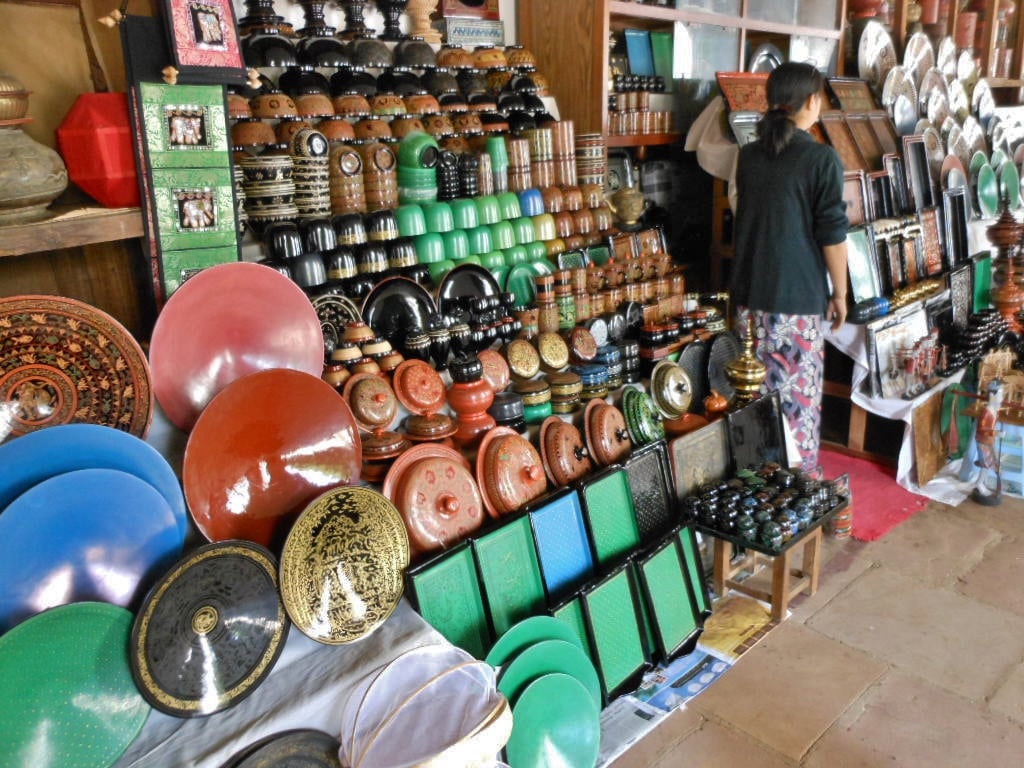
A lacquerware bowl invites a closer look. Across its smooth surface, fine lines form patterns and tiny scenes. Its beauty lies in these details, and in the patient work behind them.
Known as Pan Yun (ပန်းယွန်း), Myanmar’s lacquerware craft has a long connection with Bagan. Fragments of lacquered basketry found there date back to the 13th century.
Layer by layer
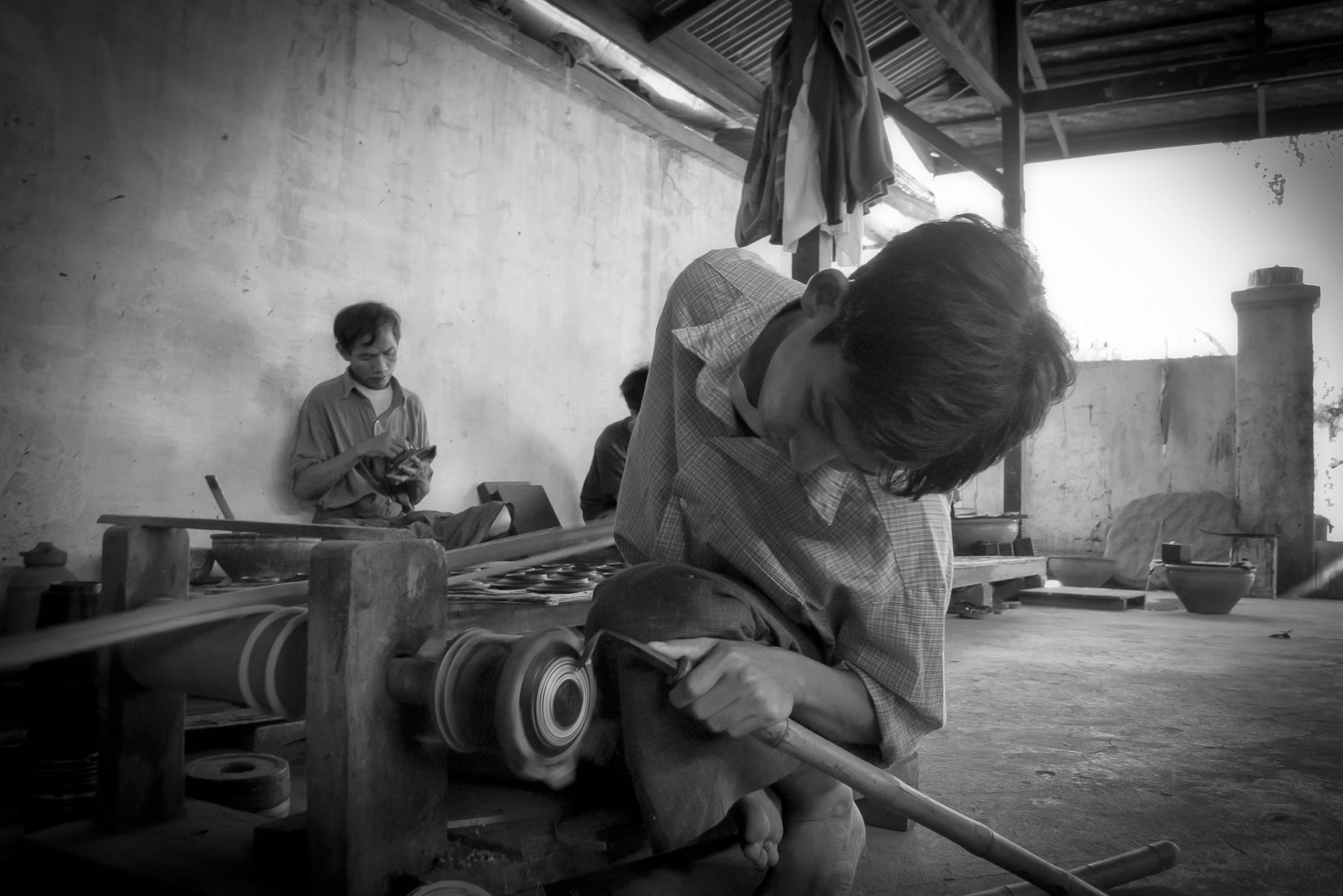
The process begins with a shaped bamboo base, sometimes woven with horsehair. Artisans apply successive layers of natural lacquer from the thitsee tree, gradually building a smooth surface. Fine designs are engraved by hand and filled with colour. Even a small vessel can take several months to complete.
Red and black backgrounds often carry delicate green and yellow patterns. Some pieces show palace scenes or stories from the Buddha’s past lives; others use gold leaf to create designs against black lacquer.
A place in everyday life
These objects also hold a place in everyday life and Buddhist traditions. Compartmented trays serve pickled tea and its accompaniments, while hsun ok, offering vessels with pointed lids, carry food for monks.
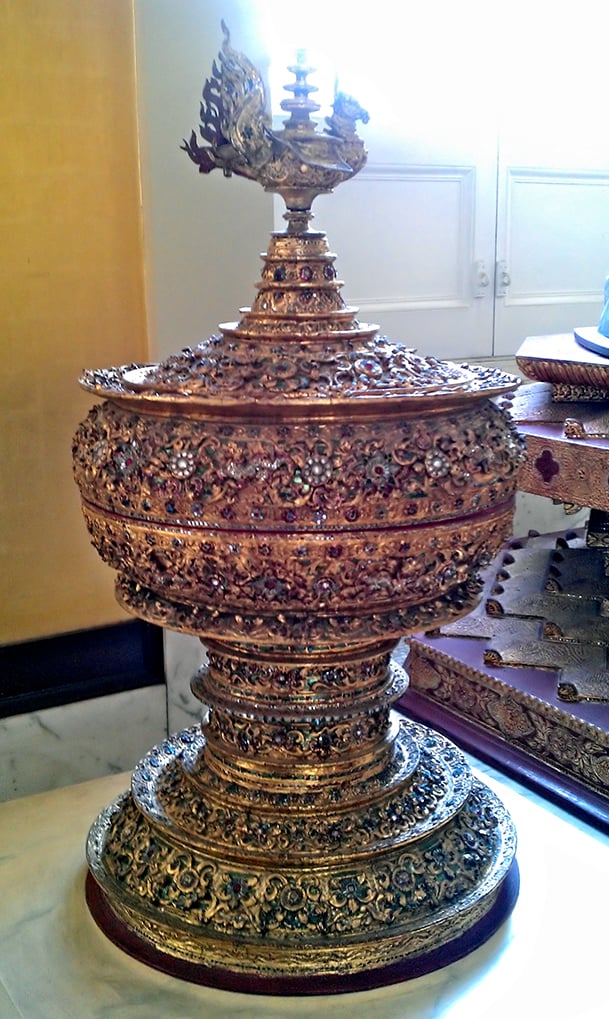
Looking closely at a finished piece brings the work into focus: the careful shaping, the small engraved marks, and the time given to an ordinary object. There is something quietly beautiful in that care.