
Noodles & Salads: Familiar Bowls, Local Stories
A squeeze of lime, a spoonful of chilli and a scattering of crispy toppings — noodles and salads bring together some of Myanmar's most familiar flavours, prepared a little differently in every town, household and stall.
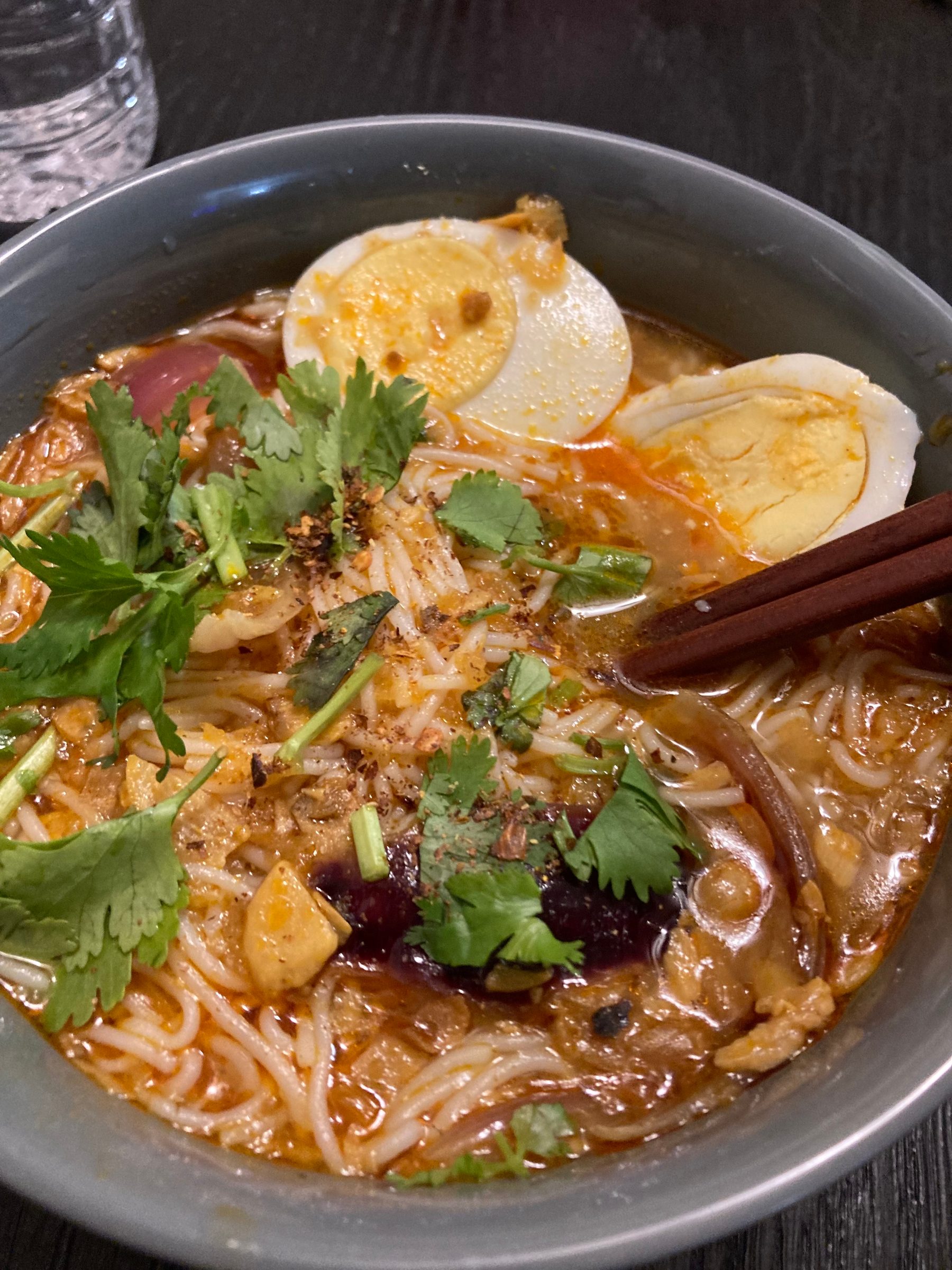
A squeeze of lime, a spoonful of chilli and a scattering of crispy toppings. Noodles and salads bring together some of Myanmar’s most familiar flavours, with each town, household and stall preparing them a little differently.
For many, the day begins with mohinga, rice noodles in a fish broth scented with lemongrass. Boiled egg and crunchy fritters add the finishing touches. Its exact beginnings are uncertain, but references appear in poetry from the Konbaung period, placing this everyday favourite in Myanmar’s history long before today’s breakfast stalls.
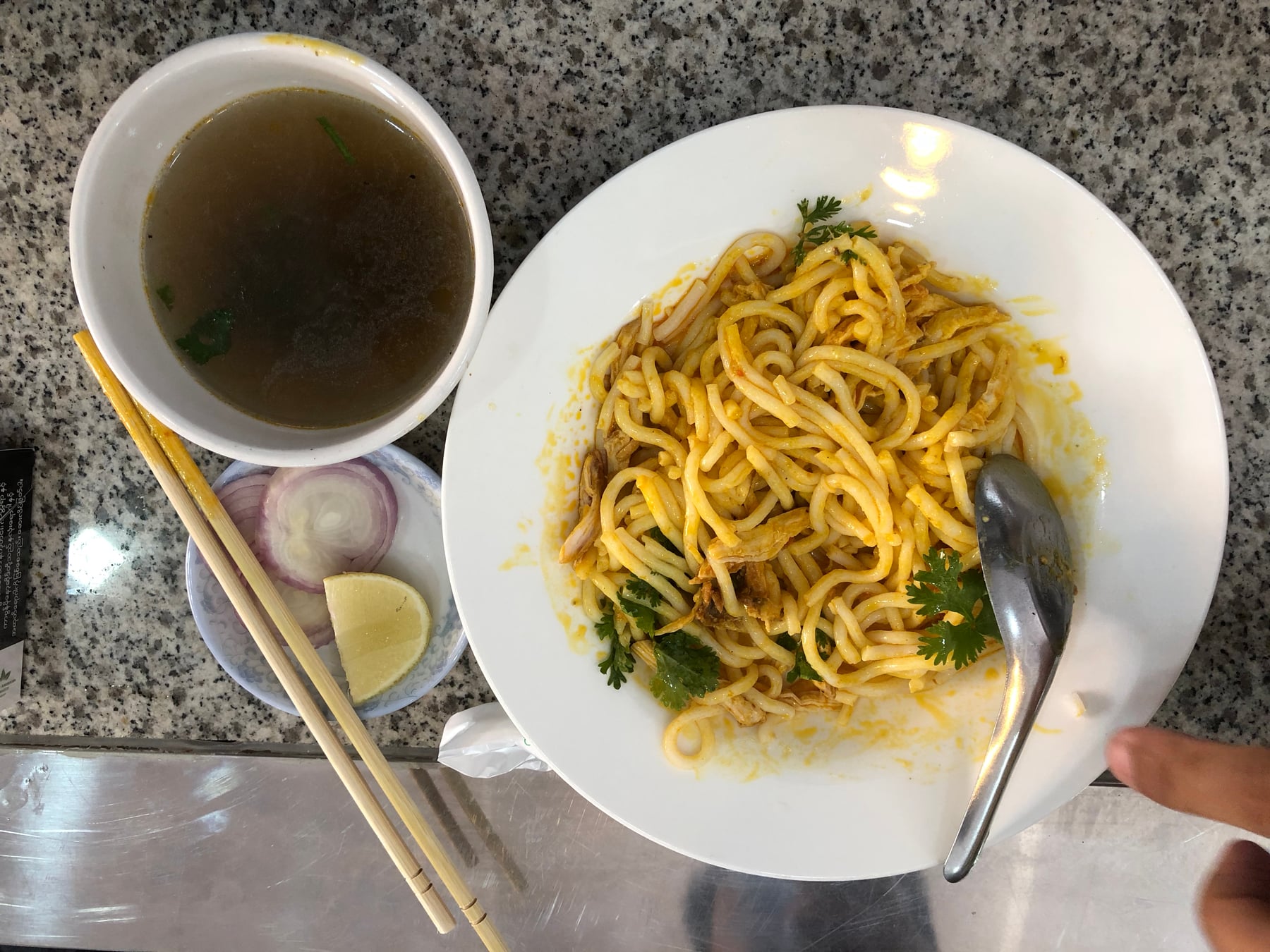
A noodle salad from Mandalay
Other bowls carry a closer connection to a particular place. Nan gyi thoke, associated with Mandalay’s street food tradition, combines thick rice noodles with chicken curry, toasted chickpea flour and lime. Mixed together before eating, it sits comfortably between a noodle dish and a salad.
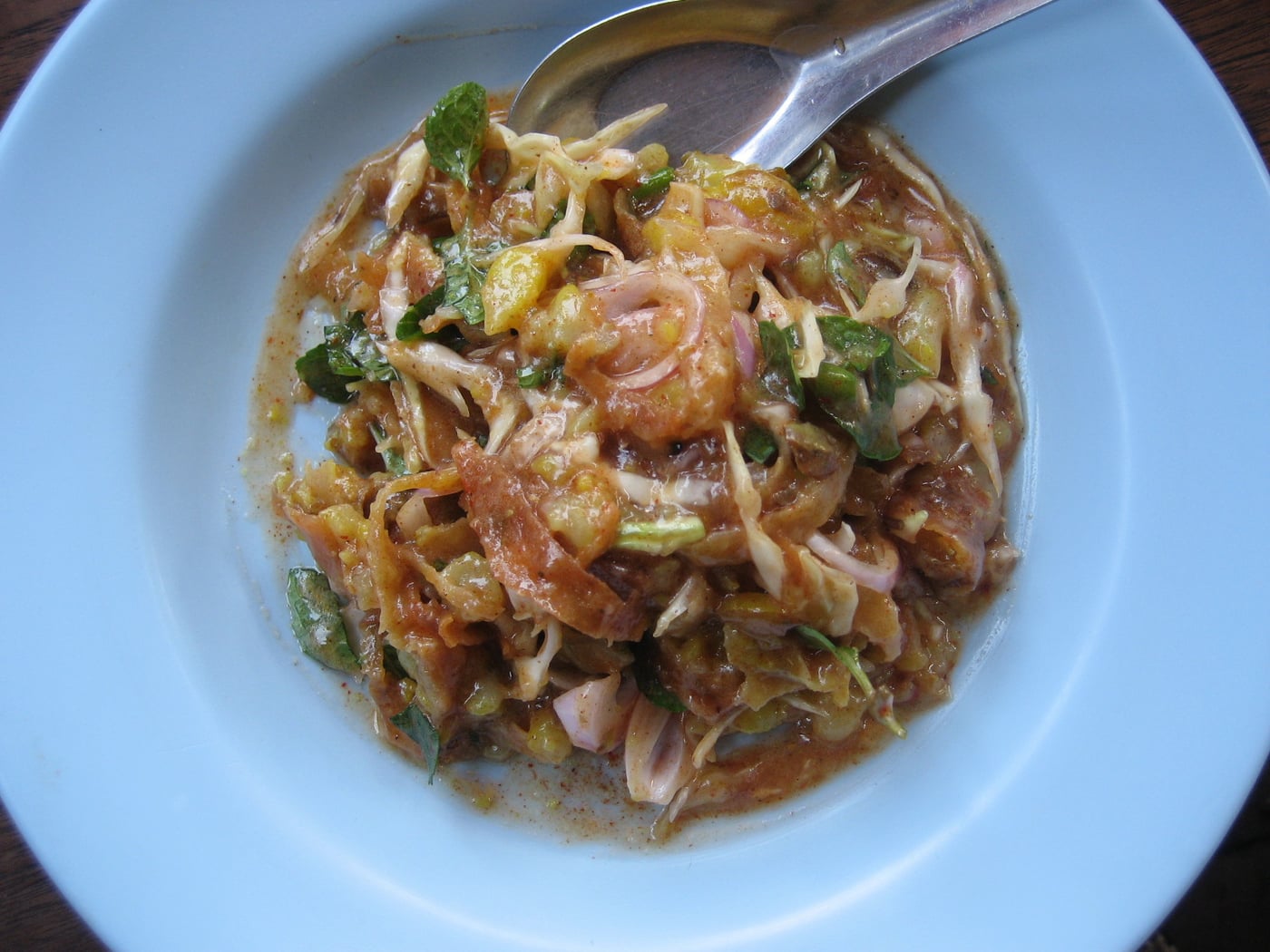
A thoke, mixed to taste
In Burmese cooking, salads, known as a thoke, can include noodles, tomatoes, ginger or even pieces of samosa. Cooked and fresh ingredients are brought together with seasonings such as garlic oil, tamarind and roasted chickpea flour. Much of their appeal lies in the mixture: soft and crunchy, sour and savoury, with chilli added to taste.
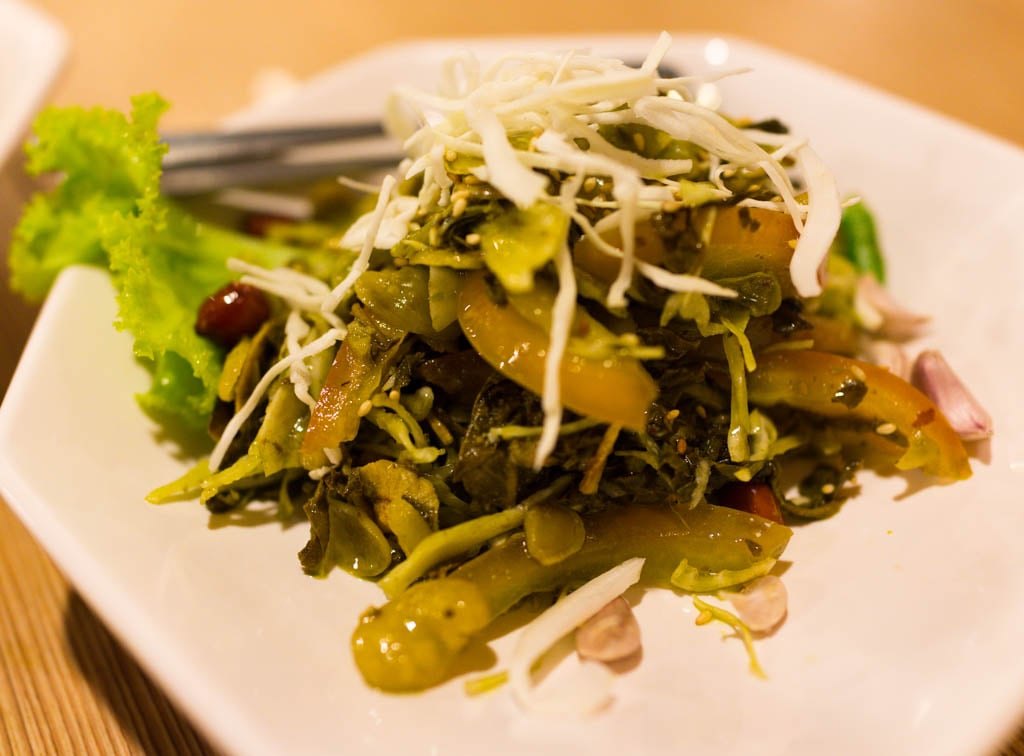
A tradition grown and fermented
Then there is lahpet thoke, fermented tea leaf salad, with its distinctive tea leaves and crunchy beans and nuts. It draws on a longstanding tradition of growing and fermenting tea, closely connected to the Ta’ang, also known as Palaung, communities. Lahpet also has a familiar place in hospitality, offered to guests visiting a home.
These dishes hold small details of the places they come from and the people who prepare them. For those who grew up eating them, a particular bowl or familiar mix of flavours can be a simple reminder of home.