
Ingredients & Traditions: Familiar Ingredients, Stories Passed Down
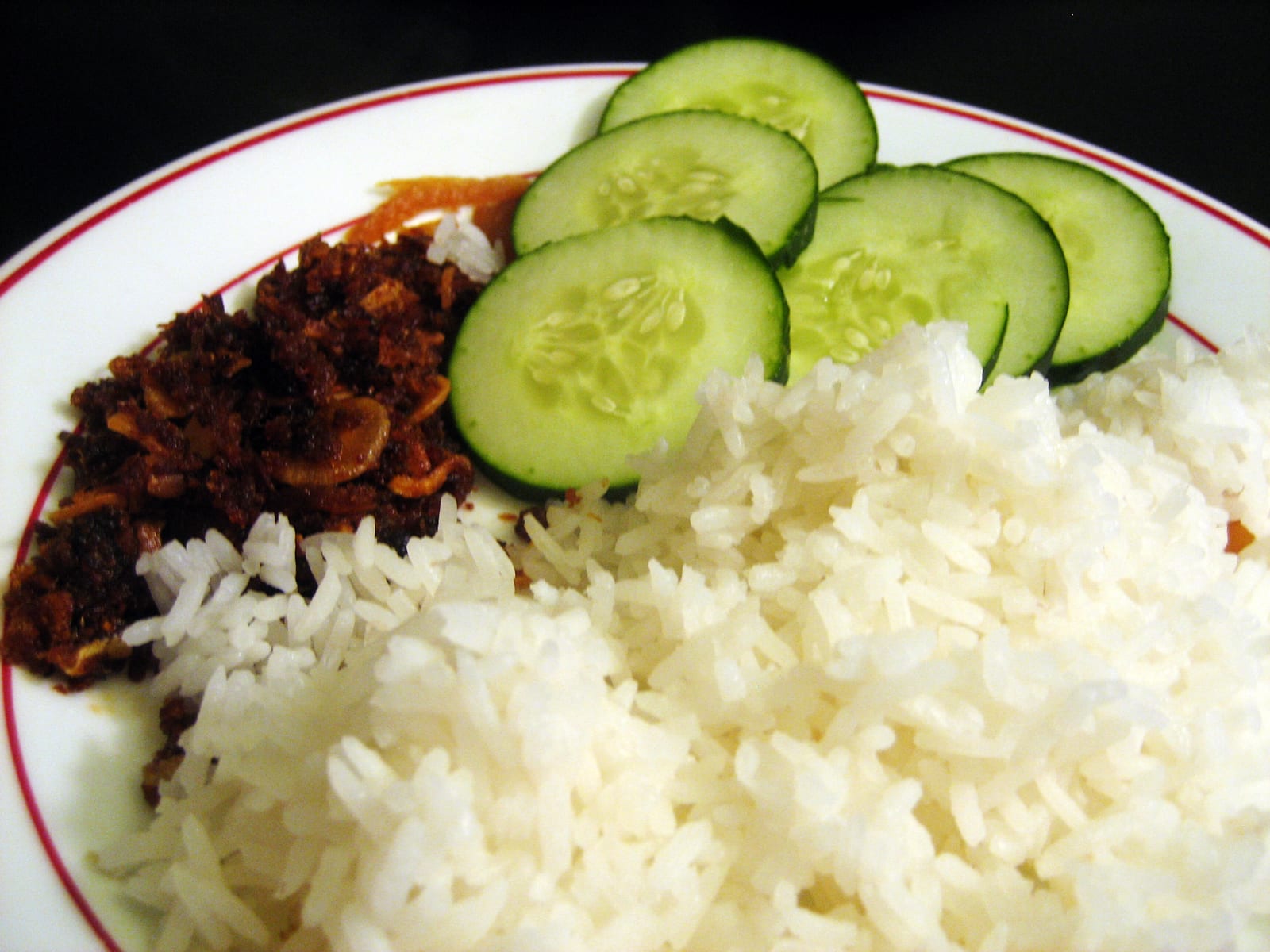
The smell of garlic warming in oil, the sourness of tamarind, the rich taste of fermented fish paste — many Burmese dishes begin with ingredients familiar in everyday kitchens.
The smell of garlic warming in oil, the sourness of tamarind, the rich taste of fermented fish paste. Many Burmese dishes begin with ingredients that are familiar in everyday kitchens. A small amount of each can change the flavour of a whole meal.
Pressed fish, centuries old
Among them is ngapi, a paste made from fermented fish or shrimp. Its name means “pressed fish”, and records of ngapi makers appear in inscriptions dating from the 1100s to the 1400s. Traded between coastal and inland communities, it has long been part of both cooking and livelihoods. Today, it is used in many forms, from a dip served with vegetables to a seasoning for soups and curries.
A leaf grown for guests
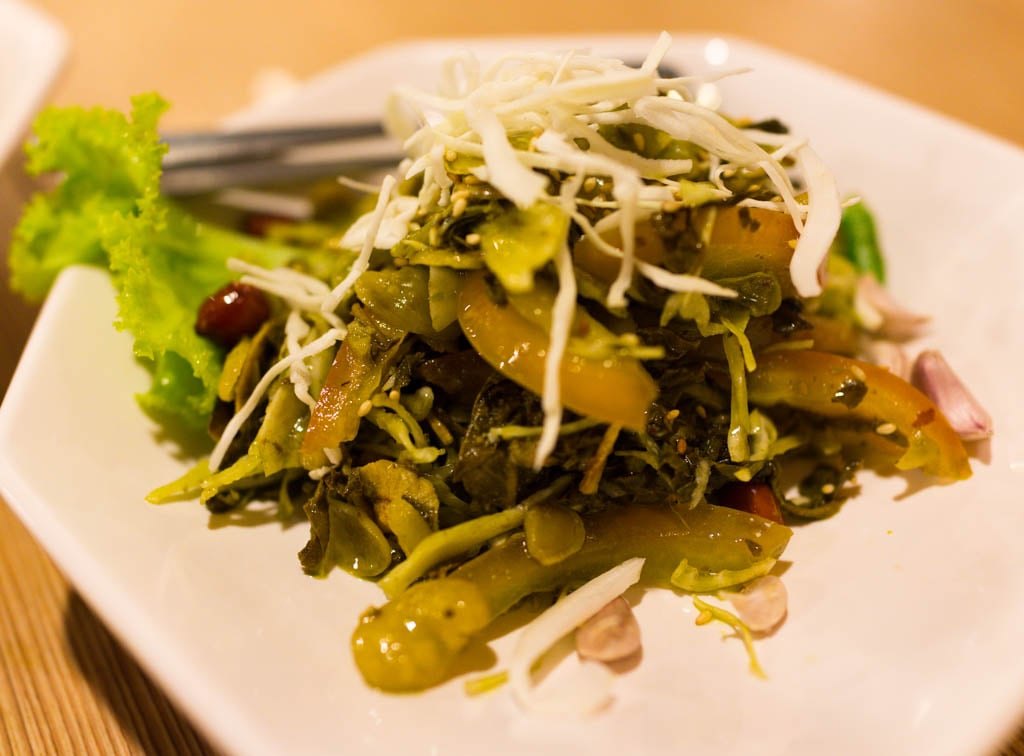
Fermented tea leaves, known as lahpet, carry another longstanding tradition. Their production is closely connected to the Ta’ang, also known as Palaung, communities. Served with crunchy beans, nuts and other accompaniments, lahpet also has a place in welcoming guests. A plate set out for visitors brings food and hospitality together in a simple, familiar way.
Ingredients that travelled far
Some ingredients have travelled far to become part of local cooking. Chillies, tomatoes and peanuts originated in the Americas and reached this part of the world through the exchange of crops over centuries. Their place in Burmese food shows how recipes have grown through trade and contact with other cultures.
A pan large enough for a neighbourhood
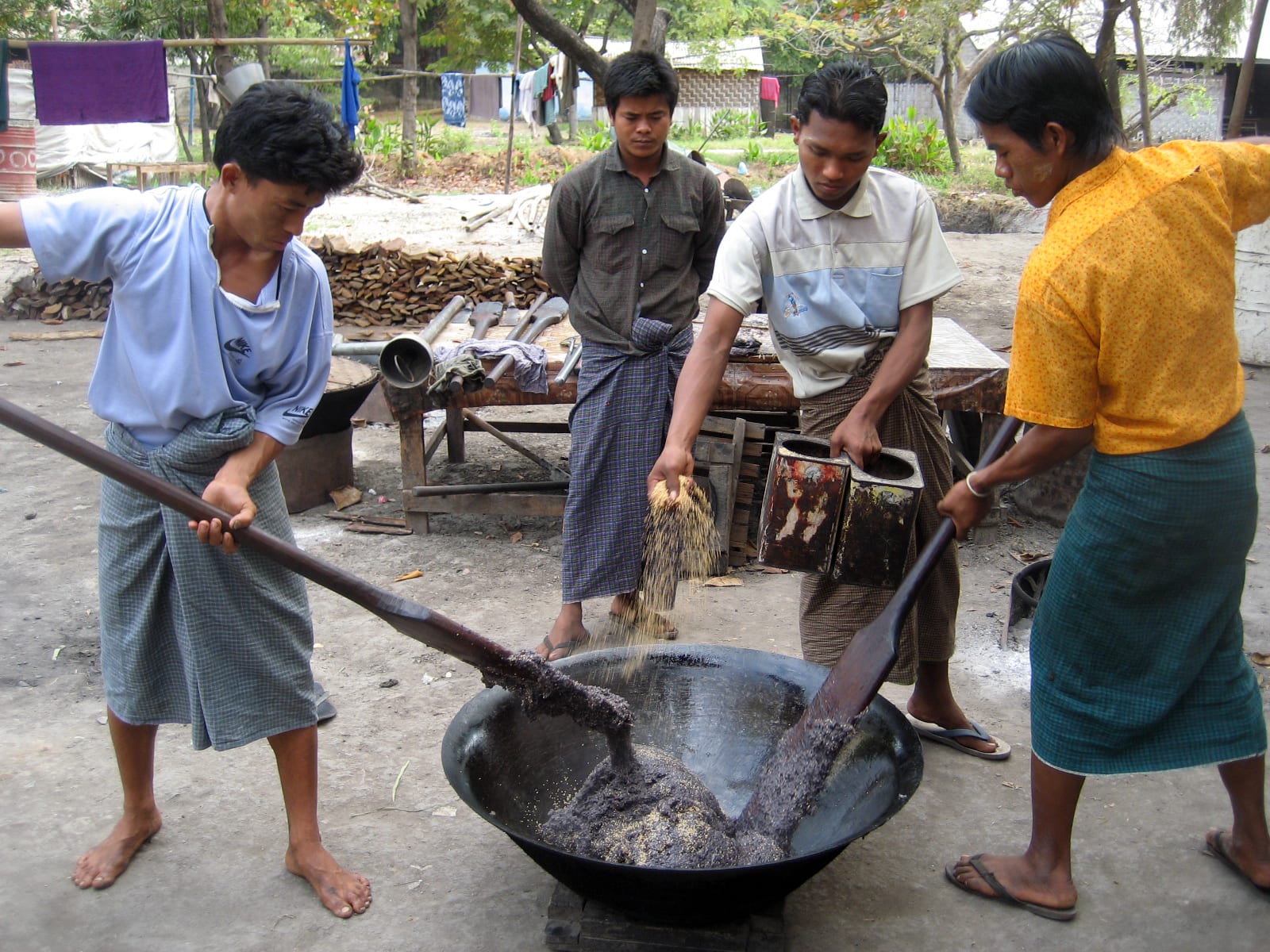
Traditions also come alive through preparation. Around the full moon of Tabodwe, usually in February, communities gather to make htamane. Glutinous rice, peanuts, sesame, ginger and coconut are worked together in large pans, a task that takes strength and coordination. The finished dish is offered and shared with neighbours, friends and family.
From a small jar of preserved ingredients to a pan large enough to feed a neighbourhood, these foods carry the knowledge of the people who prepare them. Their traditions continue each time someone learns a recipe, adjusts it to taste and makes enough to share.